Follow Me On Social Media!
Garlic Butter Beef Bites & Potatoes: The Science of “Differential Thermal Conductivity”

The Challenge: Managing Densities
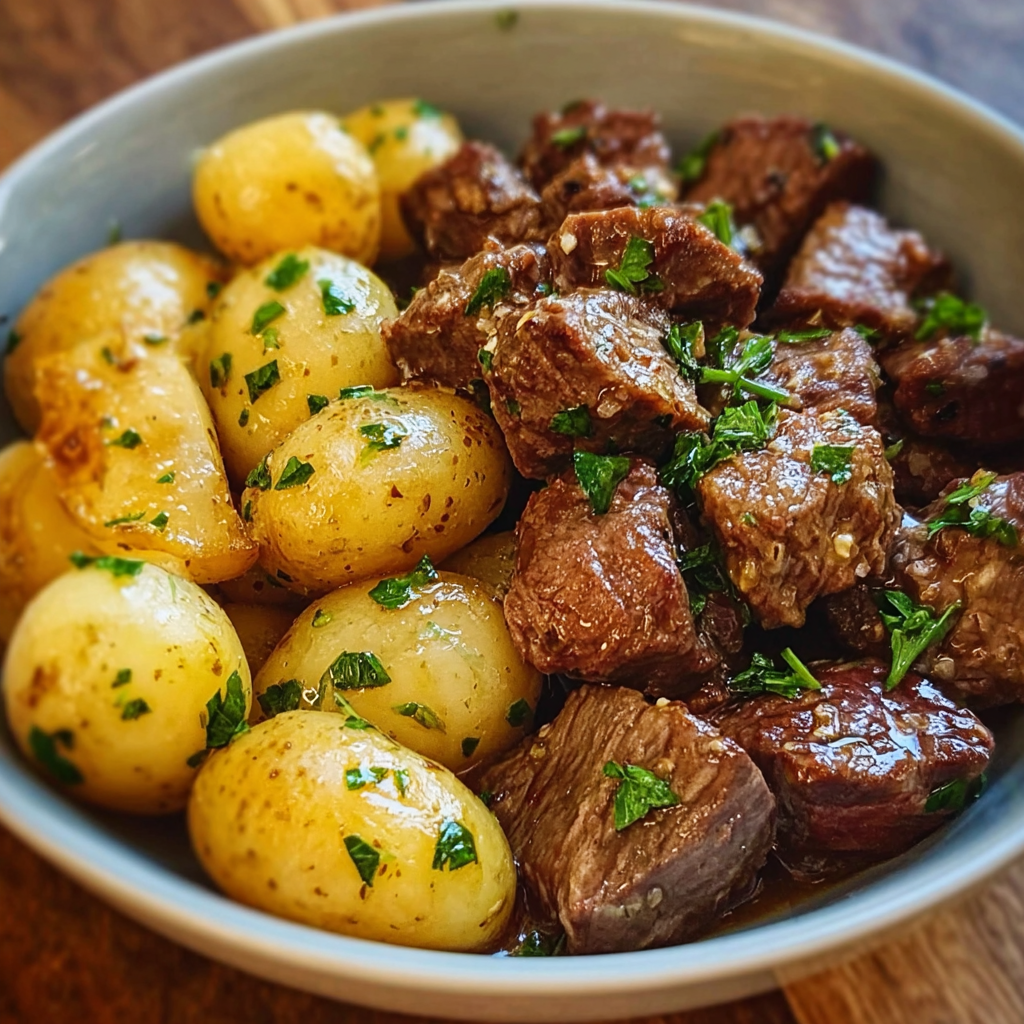
The primary difficulty in a “one-pan” beef and potato dish is the difference in Thermal Conductivity. Potatoes are dense, starch-heavy tubers with high water content, requiring significantly more time to reach a “tender-crisp” state. Beef, specifically steak tips, is a high-protein muscle that toughens and loses moisture rapidly once it exceeds $60$°C ($140$°F).
To solve this, we use the Par-Cook & Flash-Sear Method. By starting the potatoes first to soften their starches, and then introducing the beef at an extremely high temperature, we ensure the potatoes are buttery-soft while the beef maintains a “medium-rare” juicy interior.
Ingredients List: The Maillard-Aromatic Matrix
- 1.5 lbs Sirloin or Ribeye: Cut into 1-inch cubes. The Science: Choose a cut with decent marbling; the intramuscular fat will render and help fry the potatoes.
- 1.5 lbs Yukon Gold Potatoes: Cubed into 1/2-inch pieces. The Logic: Yukon Golds have a “waxy-starchy” balance that holds its shape better than Russets when sautéed.
- 4 tbsp Unsalted Butter: To be added at the end to prevent the milk solids from burning.
- 6 cloves Garlic: Minced.
- 1 tsp Dried Thyme & 1 tsp Smoked Paprika.
- Fresh Parsley: For a bright, acidic finish.
Timing: Data-Driven Efficiency
| Phase | Duration | Data Insight |
| The Potato Crisp | 12-15 Minutes | Requires constant contact with the pan for the Maillard Reaction. |
| The Beef Sear | 3-5 Minutes | Needs $230$°C+ surface temp for a “crust” without overcooking. |
| The Garlic Butter Finish | 1 Minute | Garlic aromatics (allicin) degrade if cooked longer than 60s. |
| Total Time | Approx. 20 Minutes | High-utility weeknight luxury. |
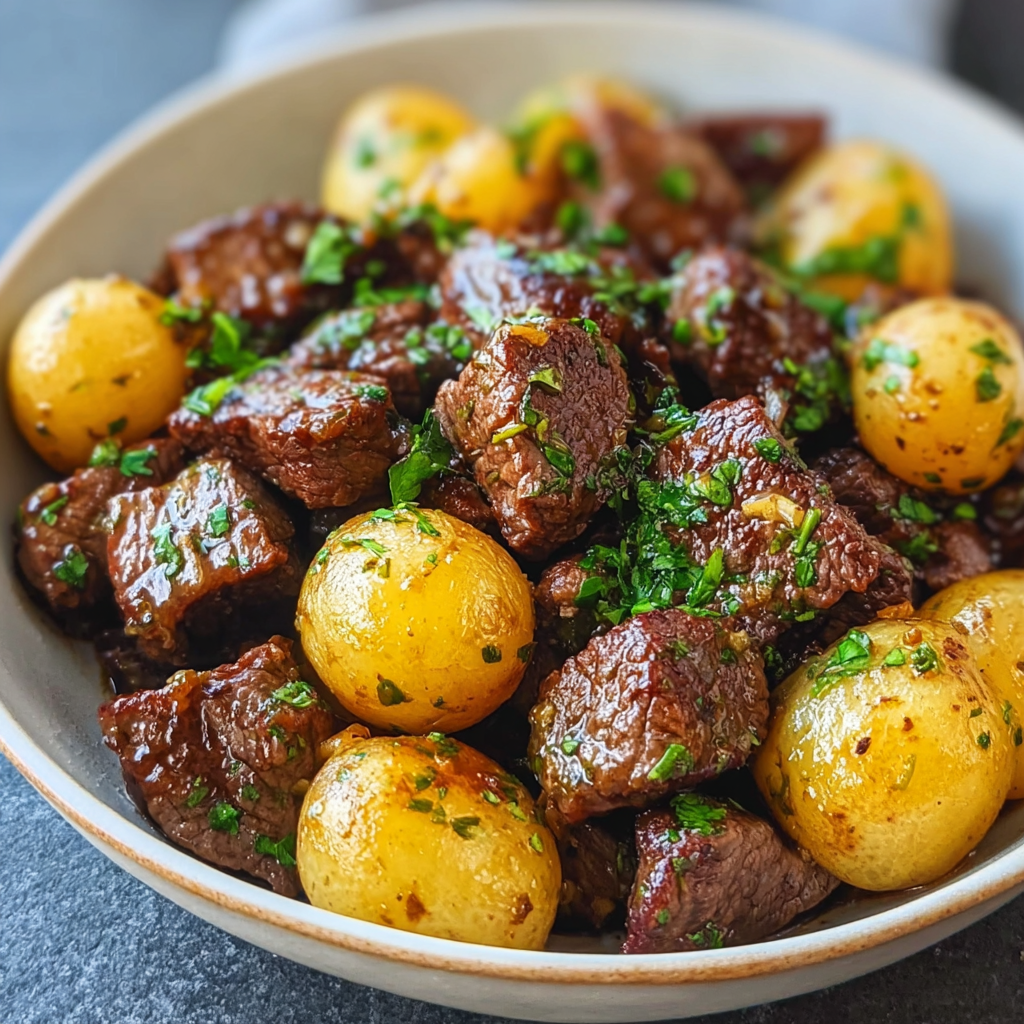
Step-by-Step Instructions
Step 1: The Starch-Set
Heat 2 tablespoons of oil in a large cast-iron or heavy skillet over medium-high heat. Add the potatoes in a single layer. Actionable Tip: Do not salt them yet. The Science: Salt draws out moisture through osmosis; keeping them dry initially allows the surface to “fry” and crisp rather than “steam.”
Step 2: The Softening Phase
Cover the pan with a lid for 3–5 minutes. The Physics: This creates a steam chamber that cooks the interior of the potatoes while the bottoms continue to crisp against the pan. Remove the lid and cook for another 5 minutes until golden. Move the potatoes to the outer edges of the pan.
Step 3: The Protein Flash-Sear
Increase heat to high. Add the beef bites to the center of the pan. Critical Rule: Let them sit undisturbed for 2 minutes. The Logic: You want to trigger the Maillard Reaction immediately to lock in the flavor before the internal temperature rises too high.
Step 4: The Garlic Butter Infusion
Once the beef has a dark crust, toss it with the potatoes. Lower the heat to medium and add the butter, minced garlic, thyme, and paprika. The Result: The butter will foam and pick up the “fond” (browned bits) from the bottom of the pan, creating a rich, garlic-infused glaze.
Step 5: The Finishing Rest
Remove from heat immediately once the garlic is fragrant (about 60 seconds). Season with salt, pepper, and fresh parsley. Let it rest for 3 minutes in the pan. The Science: Resting allows the juices in the beef to redistribute, ensuring they don’t leak out the moment you take a bite.
Success Tips & Common Mistakes
- The “Rubbery Beef” Fail: This happens if you cut the beef too small or cook it too long. Aim for 1-inch cubes—any smaller and they will overcook before they can develop a crust.
- The “Crowded Pan” Fail: If the pan is too small, the ingredients will overlap and “steam” rather than “sear.” If you don’t have a large skillet, cook the potatoes and beef in two separate batches.
- The “Burnt Garlic” Fail: Garlic has a high sugar content and burns easily. Always add it at the very end when the heat is being lowered.
Nutritional Information (Per Serving)
- Calories: 410 kcal.
- Protein: 34g.
- Total Fat: 22g.
- Carbohydrates: 18g.
Conclusion
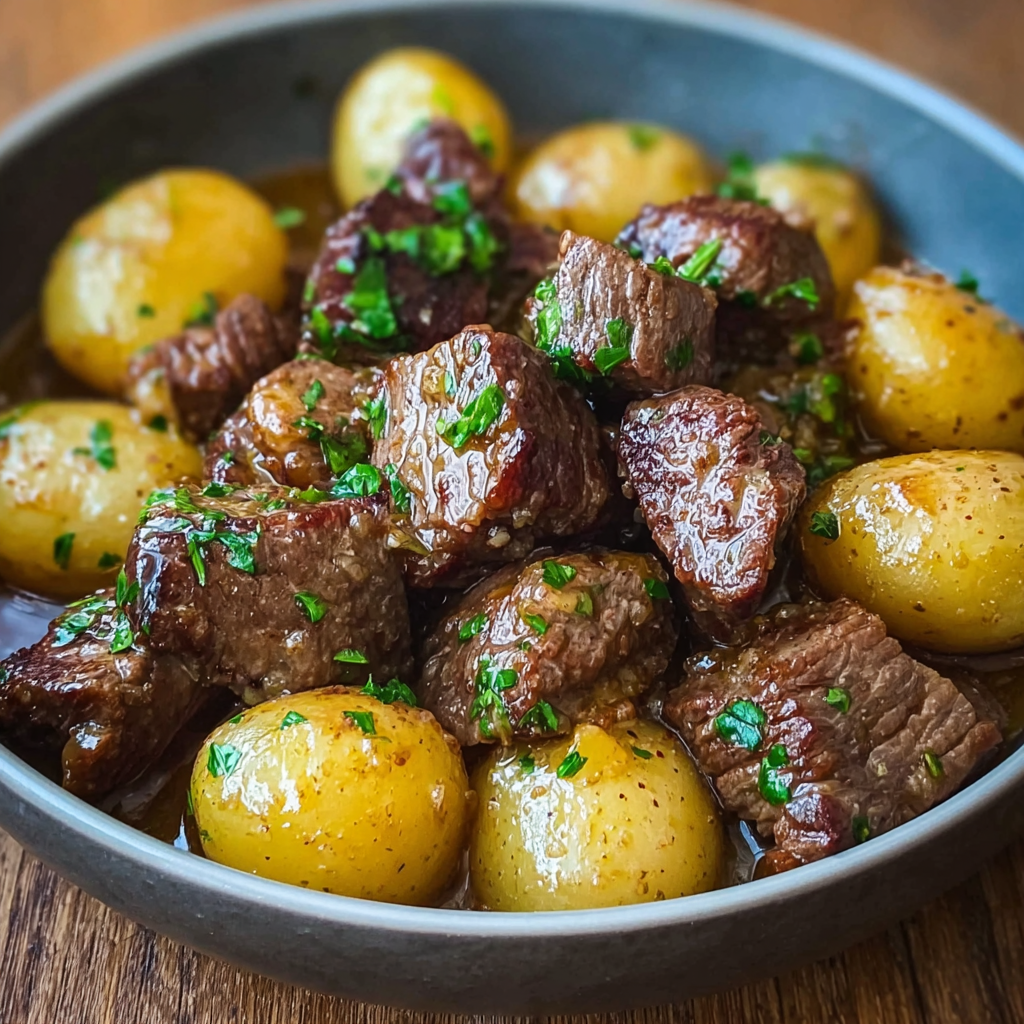
Garlic Butter Beef Bites with Potatoes is a masterclass in heat management. By respecting the different cooking rates of starch and protein, you create a harmonious dish where every component reaches its peak texture simultaneously.