Follow Me On Social Media!
Hobo Casserole: The Science of “Vertical Thermal Layering”

Why This Casserole Defies “Soggy Veggie” Syndrome
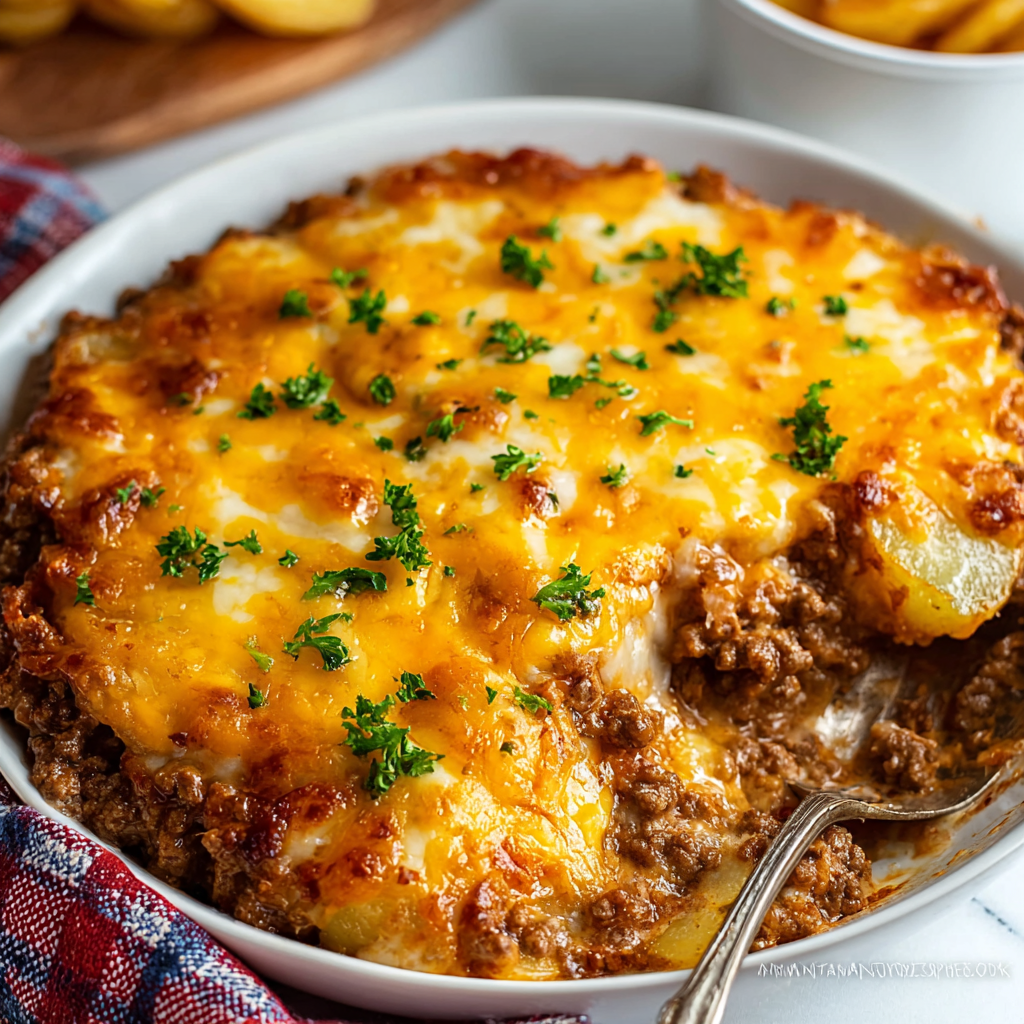
The Hobo Casserole (often called a “Shipwreck” or “Seven-Layer” Casserole) is a classic of efficiency, historically designed for slow-cooking over coals. In a modern oven, its success depends on Vertical Thermal Layering.
According to culinary physics, by stacking the ingredients in a specific order—denser starches on the bottom and high-moisture vegetables toward the top—you create a Micro-Steaming Chamber. The fat from the ground beef renders downward, seasoning the potatoes, while the moisture from the onions and peppers drips down to prevent the meat from drying out. This “gravity-fed” seasoning system ensures every layer is infused with flavor without requiring a separate sauce.
Ingredients List: The Structural Matrix
To achieve the best results, the thickness of each layer is critical for synchronized cooking times.
- 1 lb Ground Beef: (80/20 ratio). The Science: The $20\%$ fat is essential for “frying” the potato layer beneath it.
- 3 Large Yukon Gold Potatoes: Sliced into 1/8-inch rounds. The Logic: Thinner slices ensure they soften at the same rate the beef cooks.
- 1 Yellow Onion: Thinly sliced.
- 1 cup Carrots: Sliced into coins.
- 1 can (10.5 oz) Cream of Mushroom or Celery Soup: Acts as the binding emulsion.
- 1 cup Shredded Cheddar Cheese: For the “Maillard” crust.
- Salt, Pepper, and Garlic Powder: Seasoning for each layer.
Timing: Data-Driven Efficiency
| Phase | Duration | Data Insight |
| The Layering | 10 Minutes | Uniform slicing is the “data-entry” of a good casserole. |
| The Covered Bake | 45 Minutes | Traps steam to break down the cellulose in the potatoes. |
| The Uncovered Crisp | 15 Minutes | Allows surface moisture to evaporate for a “set” top. |
| Total Time | Approx. 70 Minutes | High-yield family meal. |
Step-by-Step Instructions
Step 1: The Foundation (Potatoes)
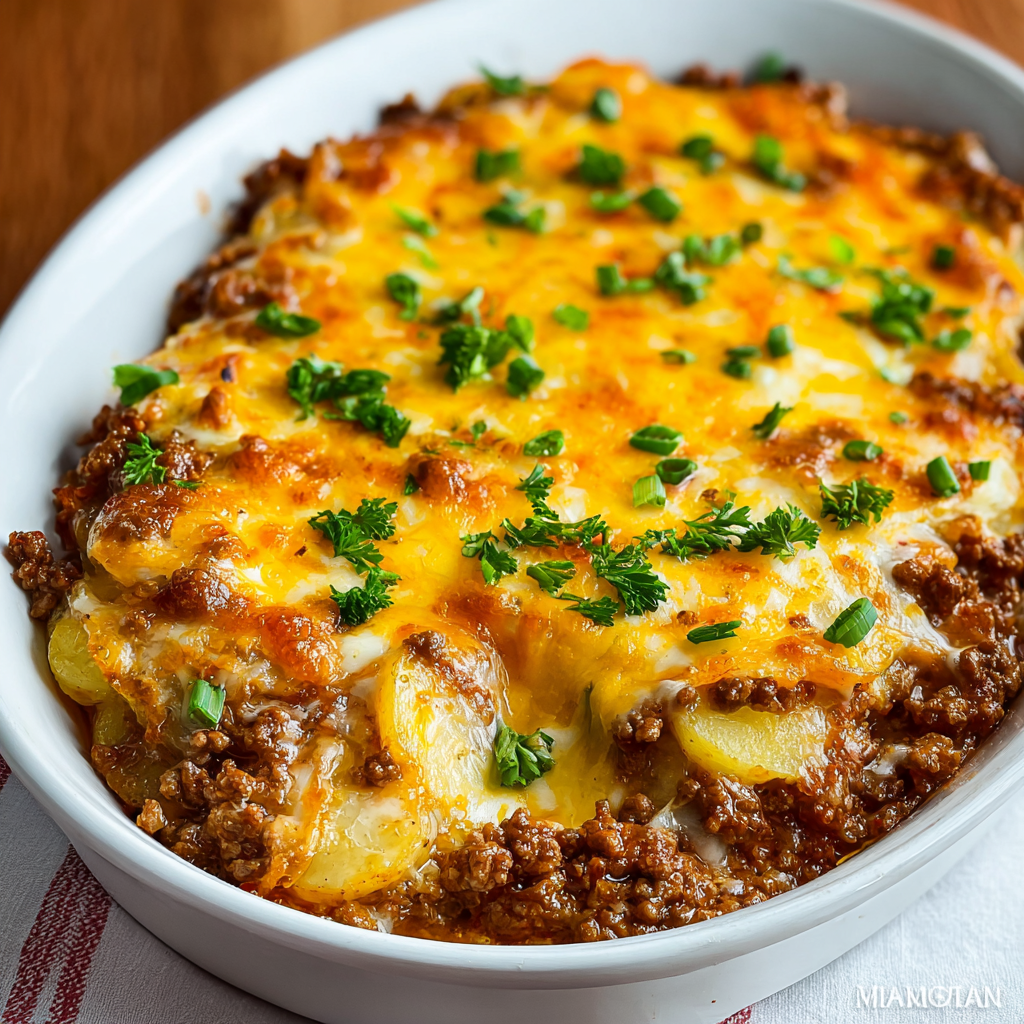
Grease a 9×13-inch baking dish. Lay the sliced potatoes in an overlapping “shingle” pattern. Season generously with salt and pepper. The Physics: Placing potatoes on the bottom ensures they absorb the rendered beef fat, effectively “confit-ing” them in the pan.
Step 2: The Protein Layer
Crumble the raw ground beef directly over the potatoes. Press it down slightly to create an even sheet. The Logic: Do not pre-brown the beef. Cooking it raw in the casserole allows the juices to permeate the starch layer below.
Step 3: The Aromatic Shield
Layer the onions and carrots over the beef. The Science: Onions contain high amounts of water; as they cook, they release steam that prevents the beef from becoming a hard, dry “brick.”
Step 4: The Emulsion Seal
Spread the cream soup evenly over the top. If the soup is too thick, whisk it with 1/4 cup of milk first. Actionable Tip: Use a spatula to ensure the soup reaches the edges to “lock in” the moisture.
Step 5: The Thermal Finish
Cover tightly with foil and bake at 375°F (190°C) for 45 minutes. Remove foil, sprinkle with cheese, and bake for another 15 minutes until the cheese is bubbling and slightly browned.
Success Tips & Common Mistakes
- The “Crunchy Potato” Fail: This happens if the potatoes are sliced too thick (over 1/4 inch) or if the foil seal isn’t tight. Steam is required to soften the starch.
- The “Grease Pool” Fail: If using a very high-fat beef (70/30), you may end up with too much liquid. If this happens, tilt the pan carefully to drain excess fat before adding the cheese.
- The Seasoning Gap: Because this dish is layered, people often forget to season the middle. Rule of Thumb: Season the potatoes, season the beef, and season the soup layer.
Nutritional Information (Per Serving)
- Calories: 420 kcal.
- Protein: 24g.
- Total Fat: 26g.
- Carbohydrates: 22g.
Conclusion
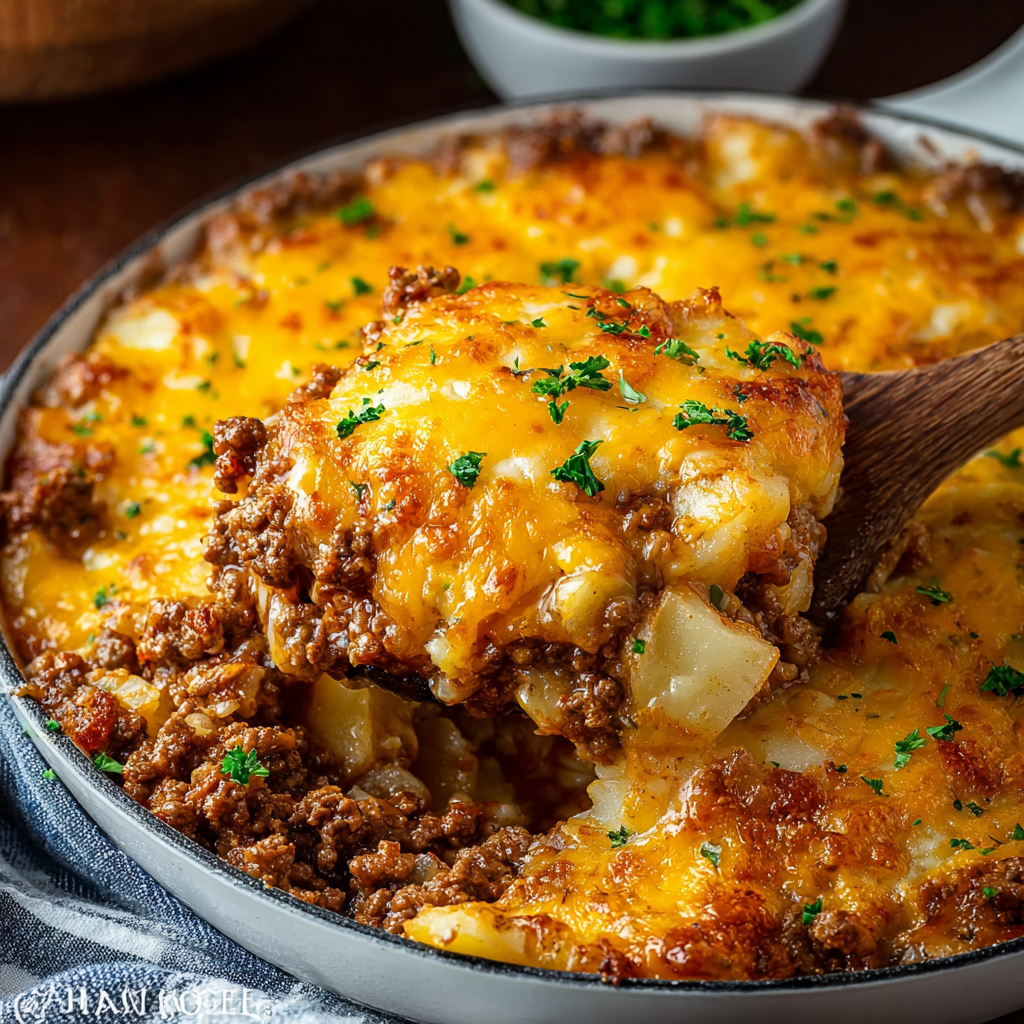
Hobo Casserole is the ultimate “set it and forget it” meal that relies on the natural interaction of fats and fibers. By letting gravity handle the seasoning through vertical layering, you create a complex, multi-textured dish with minimal active prep time.