Follow Me On Social Media!
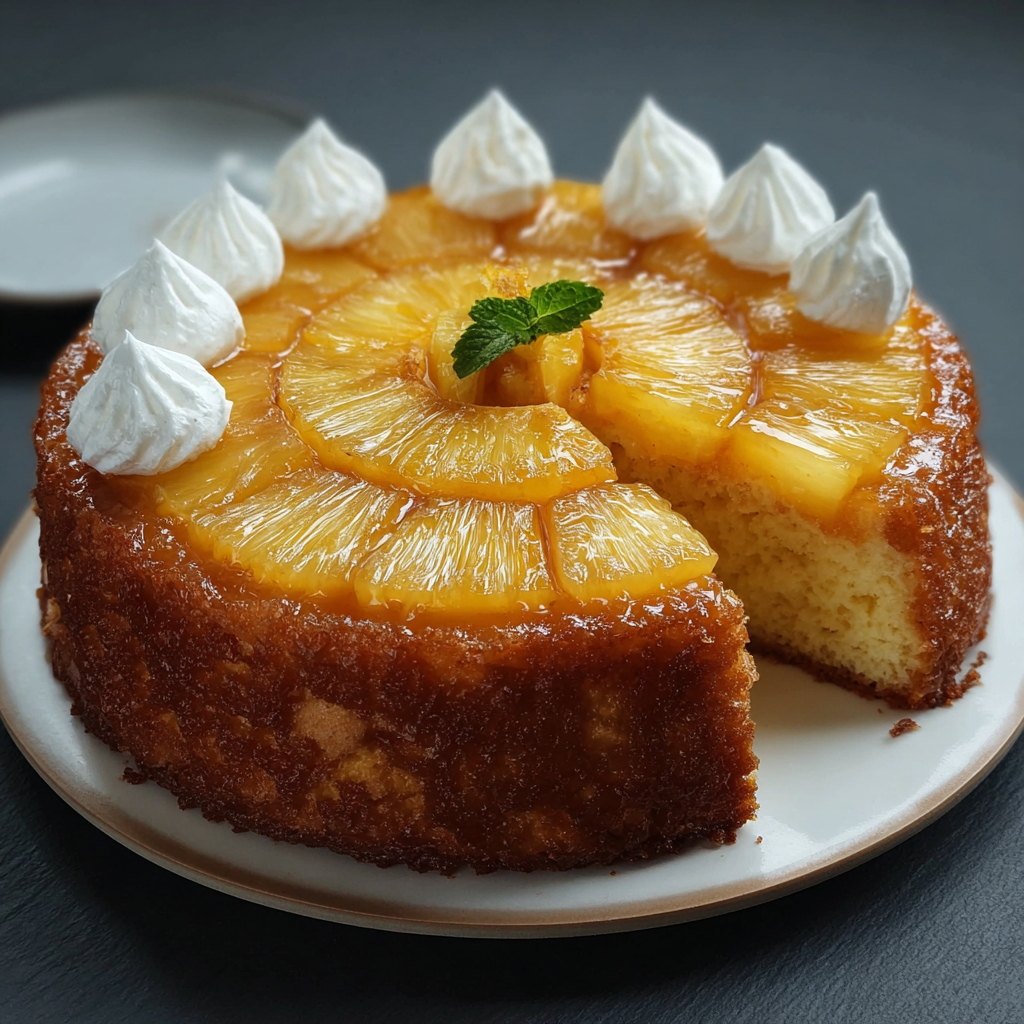
Pineapple Cake: The Science of “Acid-Induced Tenderness”

Why Pineapple Creates a Unique Crumb
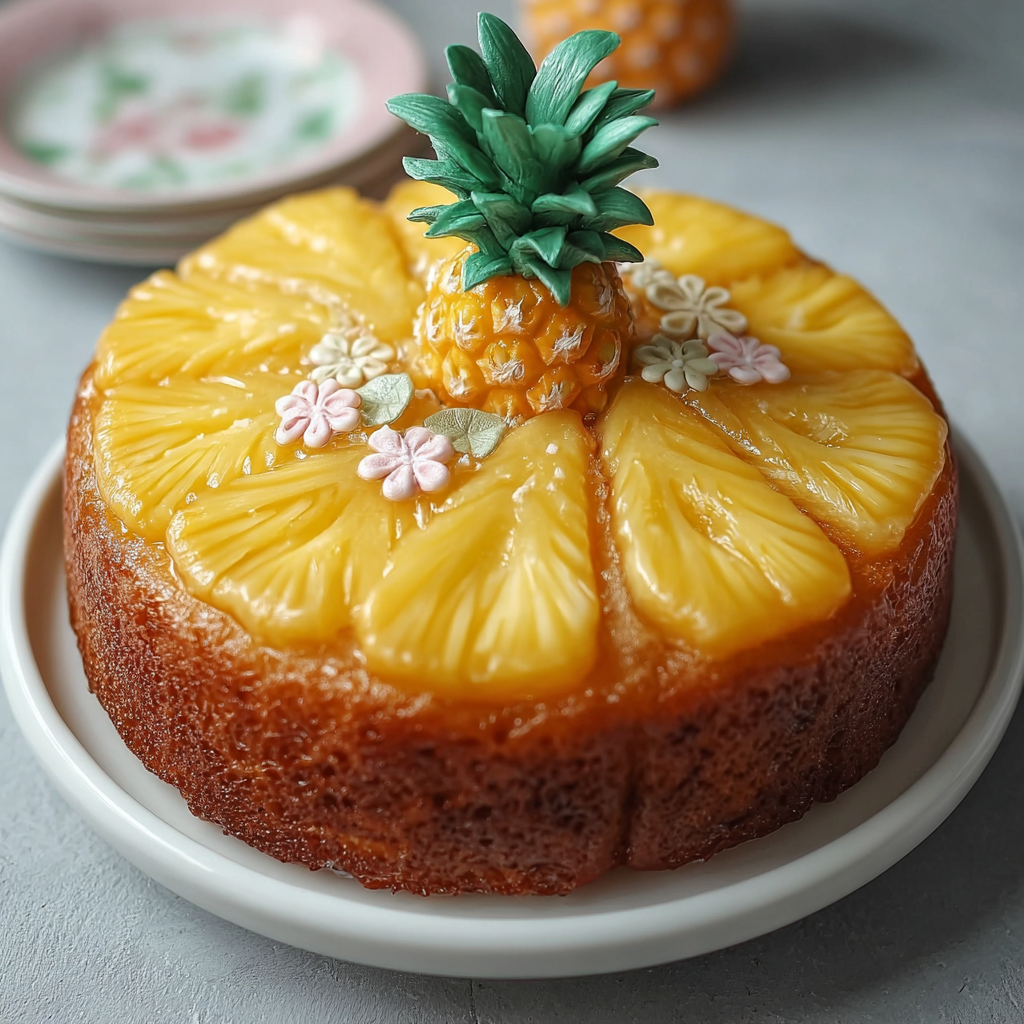
The primary challenge—and secret—of a Pineapple Cake is the interaction between the fruit’s acidity and the cake’s protein structure. Pineapple contains citric acid and an enzyme called bromelain.
While raw bromelain can break down proteins too aggressively (leading to a mushy cake), using canned or cooked pineapple neutralizes the enzyme while retaining the acidity. According to food chemistry, this acidity acts as a natural tenderizer by weakening the gluten bonds in the flour, resulting in an exceptionally soft, “melt-in-your-mouth” crumb that standard vanilla cakes cannot replicate.
Ingredients List: The Tropical Moisture Matrix
This recipe focuses on a “Picnic-Style” pineapple cake, known for its dense yet moist texture and fluffy frosting.
The Cake Base
- 2 cups All-Purpose Flour: Provides the structural scaffold.
- 1 ½ cups Granulated Sugar.
- 2 tsp Baking Soda: The Science: The alkaline baking soda reacts with the acidic pineapple juice to create carbon dioxide, providing the lift.
- 2 Large Eggs: For emulsification and protein structure.
- 1 can (20 oz) Crushed Pineapple: Do not drain! The juice is your primary liquid source.
- 1/2 cup Chopped Walnuts or Pecans (Optional): For textural contrast.
The Cream Cheese Frosting
- 8 oz Cream Cheese: Softened.
- 1/2 cup Unsalted Butter: Softened.
- 2 cups Powdered Sugar.
- 1 tsp Vanilla Extract.
Timing: Data-Driven Efficiency
| Phase | Duration | Data Insight |
| The Dry-Wet Fold | 5 Minutes | Over-mixing triggers gluten, which fights the “acid-tenderness.” |
| The Bake ($175$°C) | 30-35 Minutes | High sugar and fruit content require a stable, moderate temp. |
| The Cool Down | 45 Minutes | Fruit cakes hold heat longer; frosting too early causes “melt-off.” |
| Total Time | Approx. 85 Minutes | Crowd-pleasing classic. |
Step-by-Step Instructions
Step 1: The One-Bowl Emulsion
Preheat your oven to 350°F (175°C). In a large bowl, whisk together the flour, sugar, and baking soda. Add the eggs and the entire can of crushed pineapple (with juice). Actionable Tip: Use a sturdy spatula to fold the ingredients together until just combined.
Step 2: The Structural Inclusion
Fold in the nuts if using. The Logic: The nuts provide “structural anchors” in a very moist batter, preventing the fruit bits from sinking entirely to the bottom of the pan.
Step 3: The Level Bake
Pour the batter into a greased 9×13-inch baking pan. Visual Cue: The batter will look thick and somewhat lumpy due to the pineapple fibers—this is normal. Bake for 30–35 minutes.
Step 4: The Cream Cheese Synthesis
While the cake cools, beat the cream cheese and butter until smooth. Gradually add powdered sugar and vanilla. The Physics: The tanginess of the cream cheese chemically complements the tropical acidity of the pineapple, creating a balanced “flavor bridge.”
Step 5: The Finishing Coat
Spread the frosting over the completely cooled cake. The Logic: If the cake is even slightly warm, the fat in the frosting will liquify, and the frosting will slide off the surface.
Success Tips & Common Mistakes
- The “Mushy Center” Fail: This usually happens if the pineapple wasn’t distributed evenly or if the oven temp was too low. Ensure the crushed pineapple is mixed thoroughly so no “juice pockets” remain.
- The “Raw Pineapple” Mistake: If you use fresh pineapple, you must simmer it for 5 minutes first. The Science: Heating it to 175°F (80°C) denatures the bromelain enzyme, preventing it from “digesting” the cake’s structure.
- Flavor Enhancement: Adding a half-teaspoon of ground ginger to the dry ingredients provides a subtle heat that makes the pineapple flavor “pop.”
Nutritional Information (Per Slice)
- Calories: 320 kcal.
- Total Fat: 12g.
- Carbohydrates: 48g.
- Protein: 4g.
Conclusion
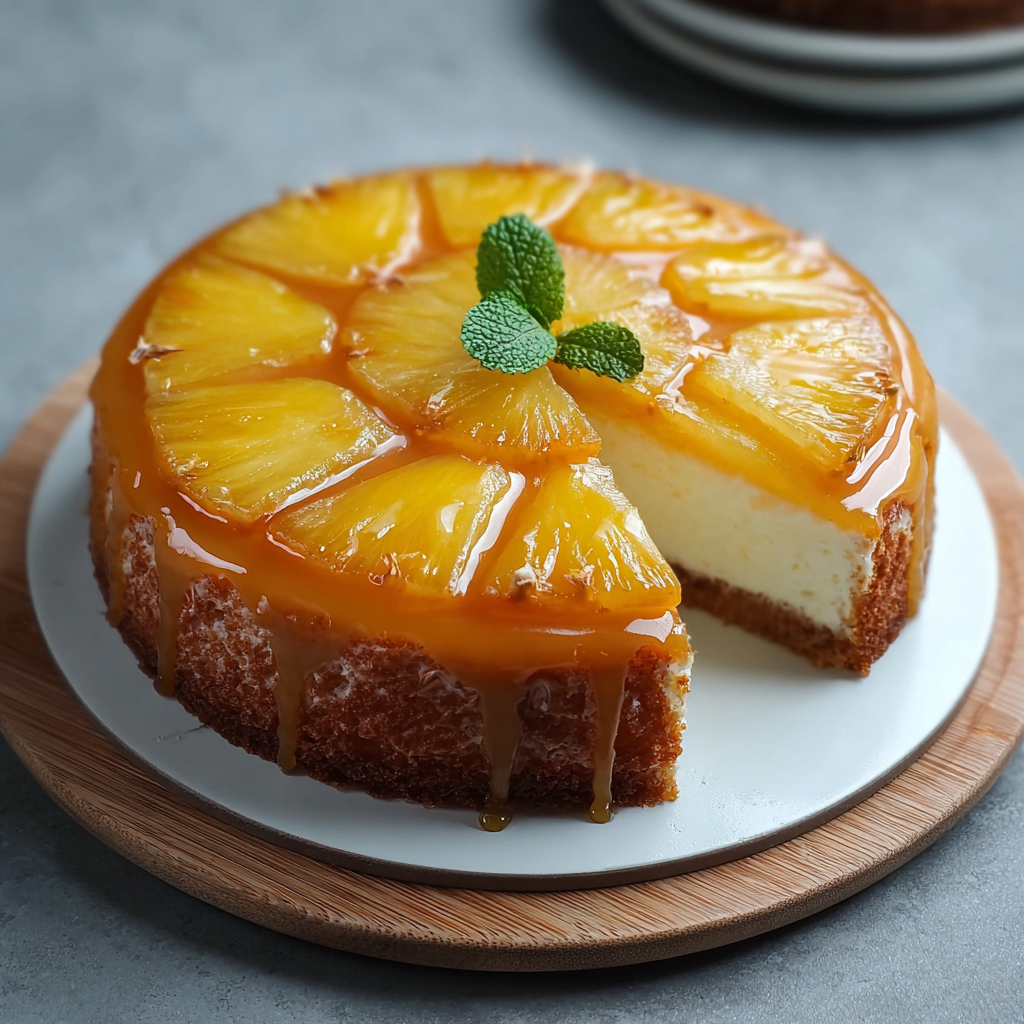
Pineapple Cake is a masterclass in using fruit chemistry to manipulate texture. By balancing acidity with a rich cream cheese frosting, you create a dessert that is simultaneously dense, light, and tropical.