
Follow Me On Social Media!
Copycat Velveeta Cheese

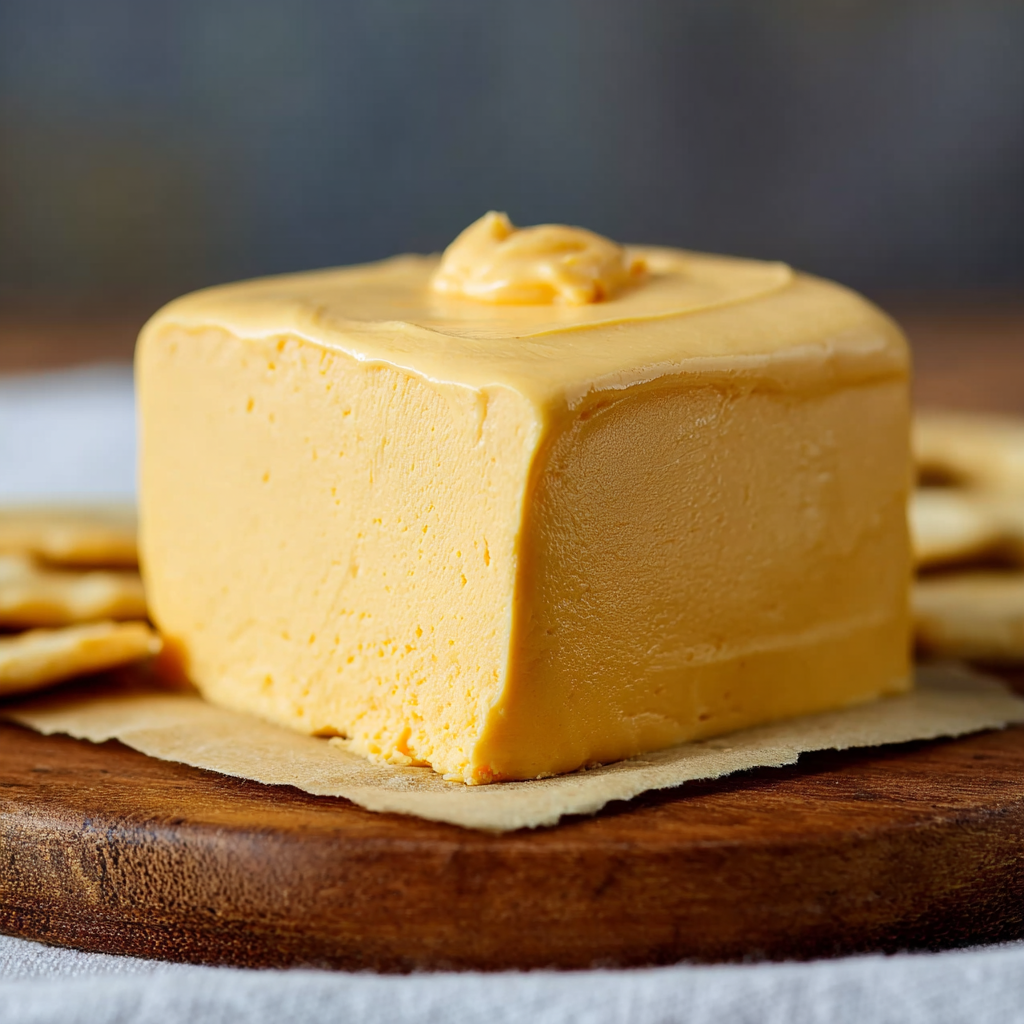
Make the Iconic Creamy Processed Cheese at Home — With Real Ingredients You Can Actually Pronounce
Introduction: What Is Really Inside That Iconic Orange Block?
Did you know that Velveeta has been a staple in American kitchens since 1928 — and yet most home cooks have never once considered making it themselves? A 2022 consumer report found that processed cheese products remain among the top 10 best-selling dairy items in the United States, with Velveeta alone generating over $500 million in annual sales. But here is the question nobody asks: what if you could recreate that exact silky, melt-in-your-mouth texture using real cheese and clean ingredients — at a fraction of the cost?
Copycat Velveeta Cheese is not just a recipe; it is a revelation. The original product achieves its legendary smooth melt through sodium citrate, an emulsifying salt that prevents cheese from breaking into greasy, grainy clumps when heated. The good news? Sodium citrate is widely available online and in specialty grocery stores, and once you understand how it works, making your own creamy, velvety processed cheese block at home takes under 20 minutes. No mystery ingredients, no preservatives, no orange dye — just pure, glorious melted cheese.
Ingredients: What You Need for Copycat Velveeta Cheese
The ingredient list is beautifully short. The star of the show is sodium citrate — without it, you cannot achieve that signature smooth, non-greasy melt that defines Velveeta. Everything else you likely already have.
MAIN INGREDIENTS (makes one ~1 lb block):
- 1 lb (450g) American cheese or mild cheddar, freshly shredded (or a blend of both)
- 3/4 cup whole milk
- 2 tablespoons sodium citrate (the essential emulsifying salt — find it online or in homebrew shops)
- 1/2 teaspoon dry mustard powder (adds depth, mimics Velveeta’s slight tang)
- 1/4 teaspoon garlic powder (optional but recommended)
- 1/4 teaspoon onion powder (optional)
- 1/4 teaspoon salt (taste first — American cheese is already salty)
- 1/4 teaspoon smoked paprika (for color and a subtle savory note)
FOR EXTRA VELVEETA-LIKE COLOR:
- 1 to 2 drops of natural annatto food coloring (optional — gives that characteristic orange hue without artificial dye)
SMART SUBSTITUTIONS:
- Mild cheddar → Sharp cheddar (stronger flavor), Colby Jack (milder, creamier), or Monterey Jack (very smooth melt)
- Whole milk → Evaporated milk (richer, more stable), or 2% milk (slightly less creamy)
- Sodium citrate → Cannot be substituted if you want the true Velveeta texture; it is the non-negotiable ingredient
- Dairy-free version → Use your favorite vegan shredded cheese + unsweetened oat milk + sodium citrate; the emulsification process works the same way
Timing: How Long Does Copycat Velveeta Cheese Take?
This is one of the fastest “homemade” projects you will ever attempt. From setup to a fully set cheese block, the total time is under 2 hours — and only 15 to 20 of those minutes require any hands-on effort. Compare that to the hours of cooking involved in most homemade cheese recipes, and this is essentially instant gratification.
- Preparation Time: 5 minutes
- Cooking Time: 10–15 minutes
- Setting / Chilling Time: 1 to 2 hours (in the refrigerator)
- Total Time: approximately 1 hour 20 minutes (mostly hands-off)
Pro tip: Make this the evening before you need it. It sets firmer overnight and slices more cleanly the next day — exactly like the store-bought block.
Step-by-Step Instructions
Step 1: Prepare Your Mold
Before you touch the cheese, set up your mold. A small loaf pan (8×4 inch) lined with plastic wrap works perfectly and gives you that classic rectangular block shape. Press the plastic wrap into all the corners and let it overhang the sides — you will use those overhanging edges to lift the finished block out cleanly. Alternatively, use a silicone loaf mold, which requires no lining. Set the mold aside.
Step 2: Shred Your Cheese Fresh
This step matters more than people realize. Pre-shredded cheese from a bag is coated in anti-caking agents (usually potato starch or cellulose) that interfere with smooth melting even when sodium citrate is present. Always shred your cheese fresh from a block for the smoothest, creamiest result. Shred it on the large holes of a box grater and set aside at room temperature for 10 minutes — cold cheese takes longer to melt evenly.
Step 3: Combine Milk and Sodium Citrate
In a medium saucepan over medium-low heat, whisk together the whole milk and sodium citrate until the sodium citrate is completely dissolved, about 1 to 2 minutes. You will notice the milk looks slightly thicker almost immediately. This is the sodium citrate beginning to create the ionic environment that will allow the cheese proteins to stay smooth and emulsified rather than clumping and separating. Do not rush this step — a fully dissolved sodium citrate base is the foundation of your entire recipe.
Step 4: Melt the Cheese Into the Mixture
Once the milk mixture is hot (not boiling — aim for around 160°F / 71°C), begin adding the shredded cheese in small handfuls, whisking constantly after each addition. Do not dump it all in at once; adding it gradually gives each handful time to fully incorporate before the next goes in. Continue whisking as you add the dry mustard, garlic powder, onion powder, smoked paprika, and salt. Within 5 to 8 minutes of steady whisking, you will have a completely smooth, glossy, pourable cheese sauce that looks and smells absolutely incredible. If using annatto coloring, add it now and stir to distribute evenly.
Step 5: Pour Into the Mold and Chill
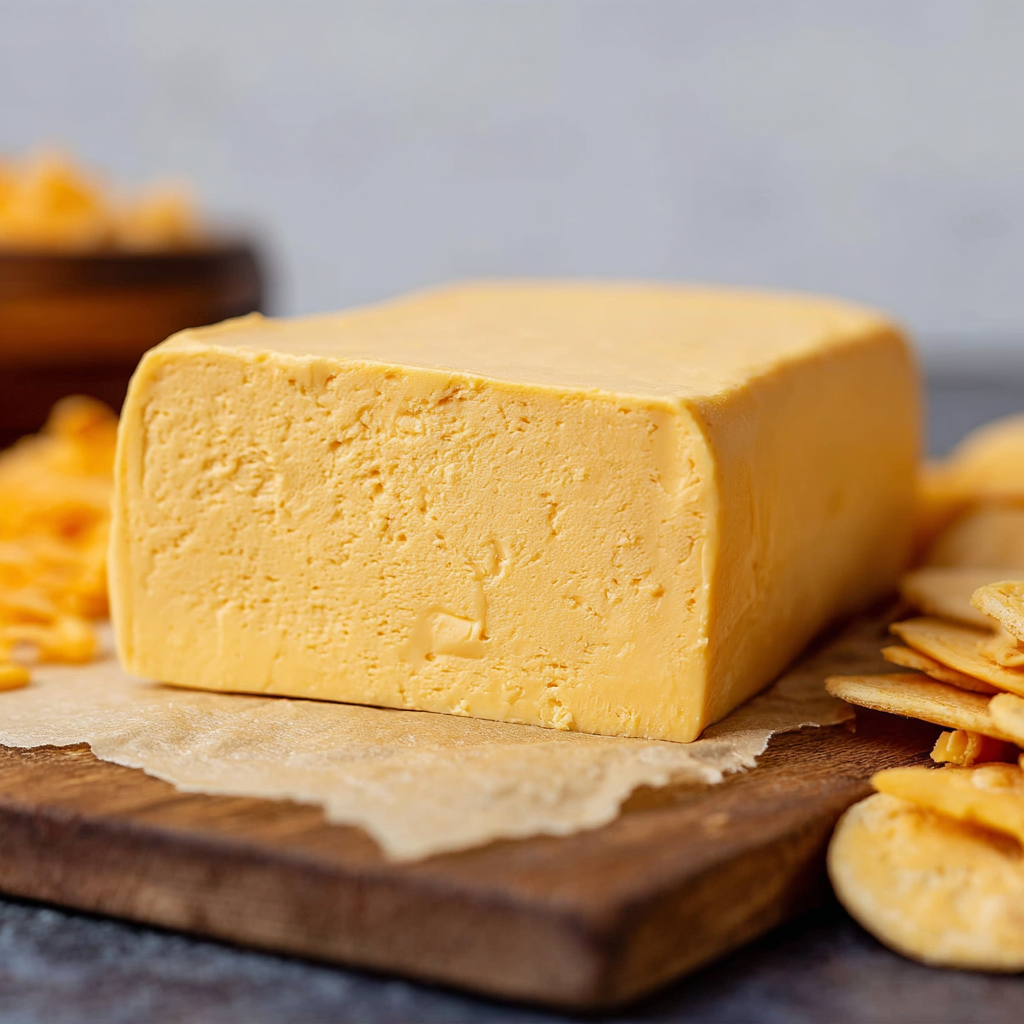
Working quickly while the mixture is still fluid, pour the hot cheese blend into your prepared loaf pan. Use a spatula to smooth the top level. Tap the pan gently on the counter a few times to release any air bubbles. Fold the overhanging plastic wrap over the top to cover. Refrigerate for a minimum of 1 hour, though 2 hours or overnight will give you a firmer, cleaner-slicing block. Once set, lift out using the plastic wrap, peel it away, and your homemade Velveeta block is ready to use exactly as you would the store-bought version.
Nutritional Information
Per serving (approximately 1 oz / 28g). Values are based on a mild cheddar and whole milk blend.
| Nutrient | Per 1 oz Serving | % Daily Value |
|---|---|---|
| Calories | 110 kcal | 6% |
| Total Fat | 9g | 12% |
| Saturated Fat | 5g | 25% |
| Cholesterol | 28mg | 9% |
| Sodium | 340mg | 15% |
| Carbohydrates | 1g | <1% |
| Protein | 6g | 12% |
| Calcium | 180mg | 14% |
Data insight: Compared to the original Velveeta (which contains about 370mg of sodium and numerous additives per ounce), this homemade version delivers a comparable flavor and melt profile with cleaner, more recognizable ingredients and no artificial preservatives or colorings — unless you choose to add them.
Healthier Alternatives for Copycat Velveeta Cheese
The homemade version is already a significant upgrade over the original. Here are ways to push it even further toward your dietary goals without sacrificing that iconic creaminess:
- Reduce sodium: Use unsalted butter in any downstream recipes and omit the added salt in this recipe; cheddar provides plenty of natural sodium on its own.
- Lower fat version: Substitute 2% milk and reduced-fat cheddar. The texture will be slightly less rich but still smooth and meltable thanks to sodium citrate doing its job.
- Higher protein option: Add 2 tablespoons of plain Greek yogurt to the milk mixture before melting — adds a slight tang similar to Velveeta’s flavor profile and boosts protein content.
- Vegan / dairy-free version: Use a firm vegan cheddar-style cheese (Violife or Miyoko’s work well), unsweetened oat milk, and sodium citrate. The chemistry is identical — sodium citrate emulsifies plant-based fats just as effectively.
- Sharp and complex flavor: Swap half the mild cheddar for aged sharp cheddar or Gruyere. You get the same melt with a far more sophisticated, complex flavor — excellent for grown-up mac and cheese or fondue.