
Follow Me On Social Media!
Greek Salad Dressing
This homemade Greek salad dressing is bright, tangy, and ready in 5 minutes. Made with olive oil, red wine vinegar, lemon, and herbs — far better than anything from a bottle.

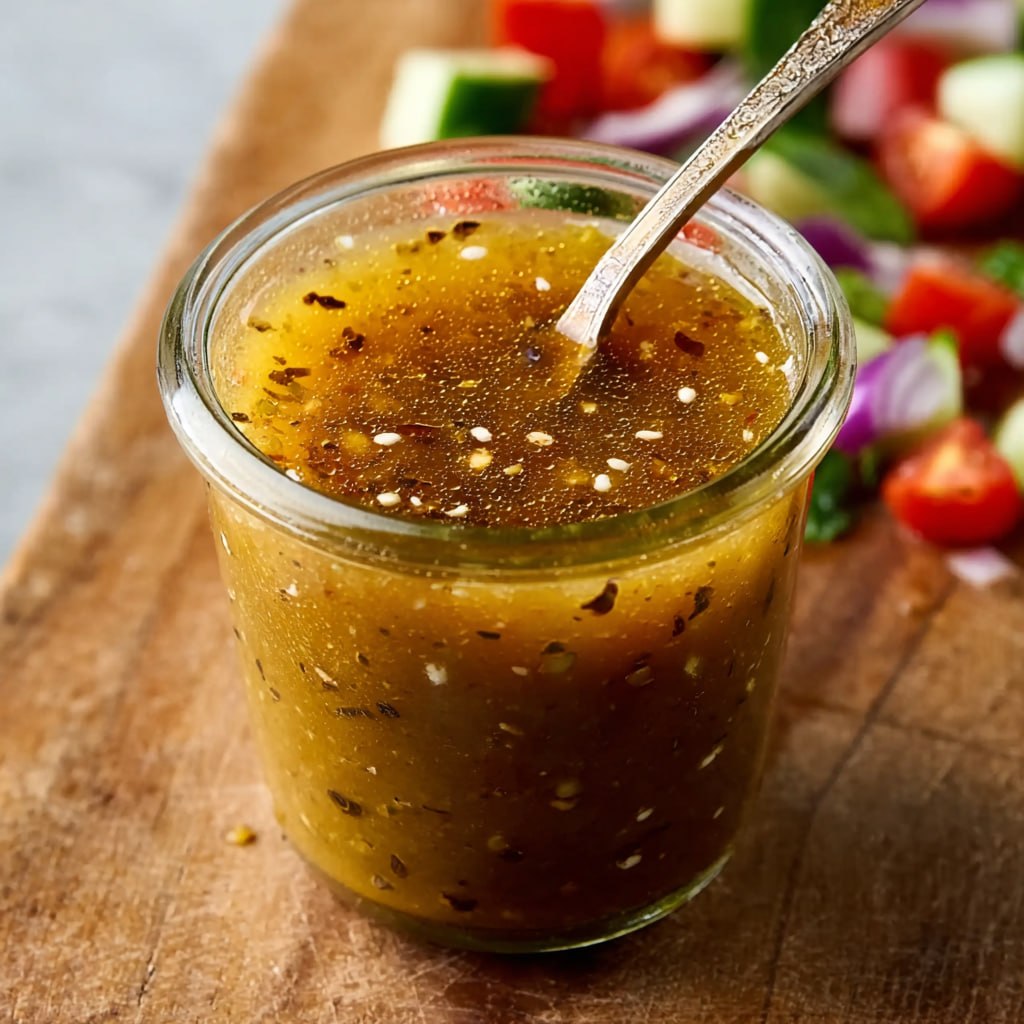
Once you make this homemade Greek salad dressing, you’ll never reach for the bottled stuff again. It comes together in 5 minutes with ingredients you probably already have — olive oil, red wine vinegar, lemon juice, garlic, and dried herbs — and the flavor is bright, tangy, and absolutely vibrant.
Use it on a classic Greek salad, as a marinade for chicken or vegetables, or drizzled over warm pita. It keeps in the fridge for two weeks, so make a big batch and use it all week.
Why This Dressing Is Better Than Store-Bought
- No preservatives or artificial ingredients
- Brighter and fresher flavor from real lemon juice
- Adjustable — make it more tangy, garlicky, or herby to your taste
- 5 minutes from start to finish
- Versatile — dressing, marinade, dip, drizzle
Ingredients
- ½ cup extra virgin olive oil
- 3 tbsp red wine vinegar
- 2 tbsp fresh lemon juice
- 1 tsp Dijon mustard
- 1 clove garlic, minced (or ½ tsp garlic powder)
- 1 tsp dried oregano
- ½ tsp dried basil
- ½ tsp salt
- ¼ tsp black pepper
- ¼ tsp sugar or honey (optional, to balance)
How to Make Greek Salad Dressing
Method 1: Shake in a Jar
Add all ingredients to a mason jar or any jar with a tight lid. Seal and shake vigorously for 30 seconds until emulsified. Taste and adjust seasoning.
Method 2: Whisk in a Bowl
Whisk together the vinegar, lemon juice, mustard, garlic, oregano, basil, salt, pepper, and sugar. Slowly drizzle in the olive oil while whisking constantly to emulsify the dressing.
Step 3: Taste and Adjust
Taste the dressing and adjust: more vinegar for tang, more olive oil for mildness, more oregano for herby flavor. The Dijon mustard acts as an emulsifier and adds a subtle depth — don’t skip it.
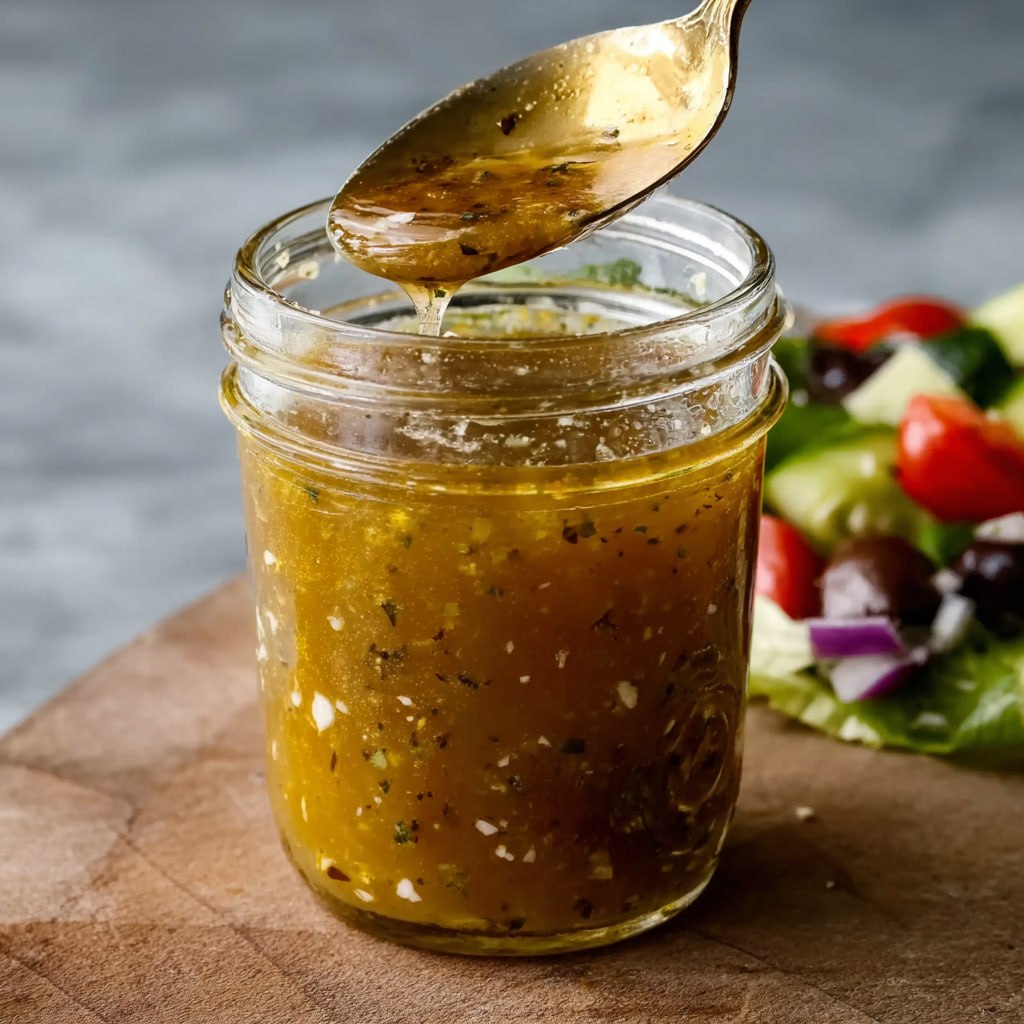
How to Use Greek Salad Dressing
- Classic Greek salad — romaine, cucumber, tomato, red onion, olives, feta
- Chicken marinade — marinate for 30 minutes before grilling or baking
- Grain bowls — drizzle over farro, quinoa, or bulgur
- Roasted vegetables — toss with zucchini, eggplant, or bell peppers
- Pita dip — serve alongside warm pita and hummus
Storage
Store in a sealed jar in the refrigerator for up to 2 weeks. The olive oil may solidify when cold — just let it sit at room temperature for 5 minutes and shake well before using. The garlic flavor intensifies over time, which makes day 2 and 3 even better.
Frequently Asked Questions
What vinegar is used in Greek dressing?
Red wine vinegar is traditional and gives the characteristic tangy flavor. You can substitute white wine vinegar for a milder taste, or apple cider vinegar in a pinch.
Can I use fresh herbs instead of dried?
Yes. Use 3x as much fresh as dried — so 1 tbsp fresh oregano instead of 1 tsp dried. Fresh herbs give a more delicate flavor; dried herbs are more concentrated and traditional.
Why does my dressing separate?
Oil and vinegar naturally separate — that’s normal. The Dijon mustard helps it stay emulsified longer. Just shake or whisk before each use.
Is Greek dressing the same as Italian dressing?
They’re similar but not the same. Greek dressing typically uses more lemon juice and oregano, while Italian dressing has a wider blend of herbs and often less lemon. Greek dressing also tends to use red wine vinegar specifically.