Follow Me On Social Media!
Chicken Katsu
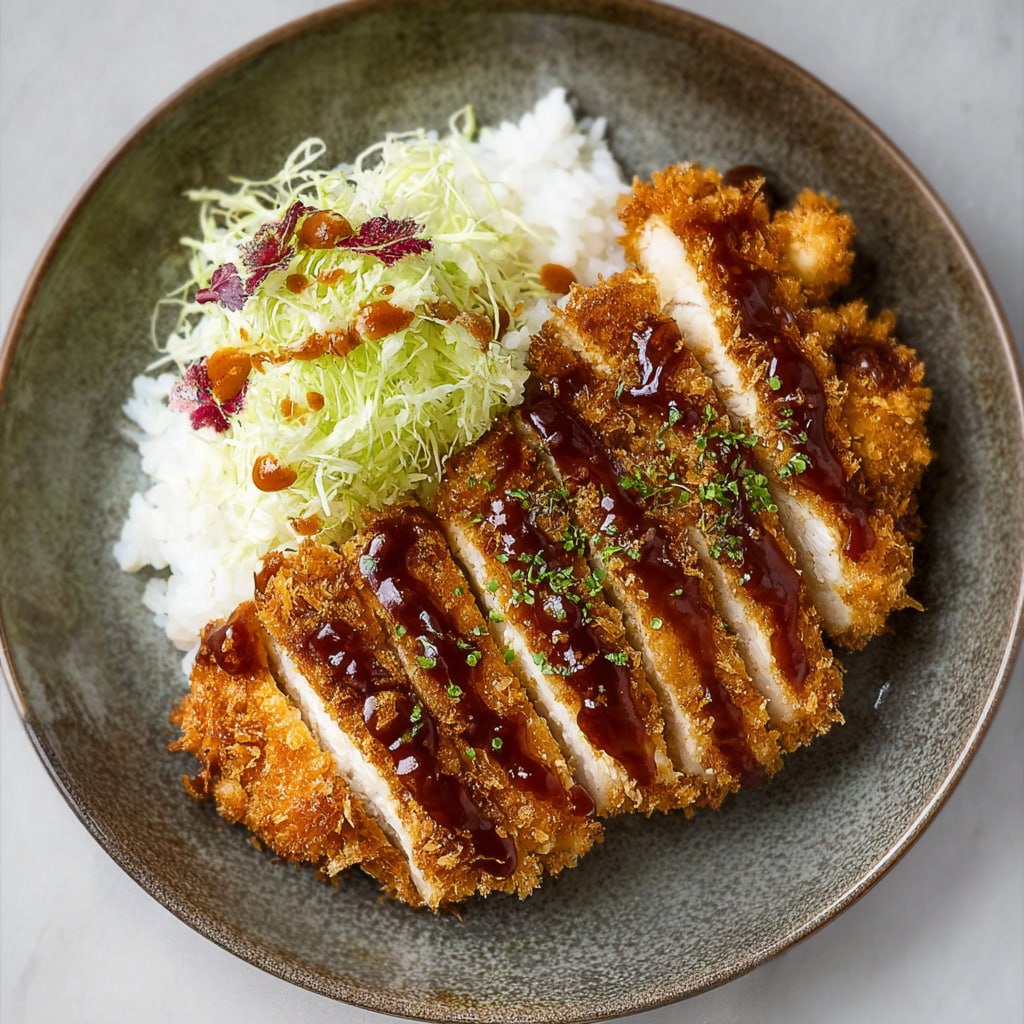
Golden, crunchy chicken katsu with homemade tonkatsu sauce — a Japanese classic that is surprisingly easy to make at home.

Introduction
Chicken katsu is one of the most satisfying things you can make in a home kitchen. A thin chicken breast, pounded tender, dredged in flour, dipped in egg, coated in panko breadcrumbs, and fried to a shattering golden crust — then sliced and served over rice with a drizzle of sweet, tangy tonkatsu sauce and a pile of finely shredded cabbage. It is simple, it is quick, and it is the kind of dish that makes you feel genuinely accomplished.
The Japanese katsu style of breaded cutlet (derived from the French côtelette) is all about that crunchy exterior and juicy interior. The secret is panko — Japanese-style breadcrumbs that are coarser, airier, and crispier than regular breadcrumbs. Once you use panko for breading, you will never go back.
What Is Chicken Katsu?
Katsu (カツ) is a shortening of katsuretsu, the Japanese transliteration of “cutlet.” Tonkatsu (pork cutlet) was the original, introduced in Japan in the late 1800s. Chicken katsu became popular as a lighter alternative, using chicken breast (or thigh) in place of pork. Today it is a staple of Japanese home cooking, yoshoku (Western-influenced Japanese cuisine) restaurants, and convenience stores across Japan.
Classic chicken katsu is served three ways: over rice (katsu don when topped with egg and onion), in a sandwich (katsu sando), or on a plate with shredded cabbage and rice. All three are excellent. This recipe focuses on the plate version — the most versatile base.
Ingredients
For the chicken:
- 2 large boneless skinless chicken breasts (or 4 thighs)
- Salt and pepper
- ½ cup all-purpose flour
- 2 large eggs, beaten
- 1½ cups panko breadcrumbs
- Neutral oil for frying (vegetable, canola, or avocado)
For tonkatsu sauce:
- 3 tablespoons Worcestershire sauce
- 2 tablespoons ketchup
- 1 tablespoon soy sauce
- 1 tablespoon honey or sugar
- 1 teaspoon Dijon mustard
To serve:
- 2 cups steamed Japanese short-grain rice
- 2 cups shredded green cabbage
- Lemon wedges
Step-by-Step Instructions
Make tonkatsu sauce: Whisk all sauce ingredients together in a small bowl. Taste and adjust — more honey for sweeter, more Worcestershire for depth. Set aside. (This sauce keeps refrigerated for 2 weeks.)
Prepare the chicken:
- If using chicken breasts, butterfly them or pound to an even ½-inch thickness between plastic wrap. Even thickness = even cooking. This is the most important step.
- Season both sides generously with salt and pepper.
Bread the chicken (the three-step dredge):
- Set up three shallow dishes: flour in the first, beaten eggs in the second, panko in the third.
- Dredge each piece in flour, shaking off excess.
- Dip in egg, letting excess drip off.
- Press firmly into panko on both sides, making sure every surface is coated. Press the panko in — do not just pat it on.
Fry:
- Pour about ½ inch of oil into a wide, heavy skillet. Heat over medium-high until shimmering (about 350°F / 175°C).
- Test with a pinch of panko — it should sizzle immediately.
- Add chicken carefully. Do not crowd the pan — fry in batches if needed.
- Fry 3–4 minutes per side until deeply golden and crispy. Internal temperature should reach 165°F (74°C).
- Transfer to a wire rack (not paper towels — rack keeps the bottom crispy). Rest 2 minutes.
Slice and serve:
- Slice katsu crosswise into strips using a sharp knife with one clean motion per cut.
- Serve over rice with shredded cabbage alongside.
- Drizzle tonkatsu sauce over the top and serve extra on the side.
- Add a squeeze of lemon just before eating.
Tips for Extra-Crispy Katsu
Panko is non-negotiable. Regular breadcrumbs produce a denser, softer crust. Panko’s light, airy texture creates the shattering crunch that defines katsu.
Press the panko firmly. Gently pressing the panko into the chicken ensures adhesion and creates a thick, even crust.
Oil temperature control. Too cool and the crust absorbs oil and turns greasy. Too hot and the exterior burns before the chicken cooks through. Medium-high and a thermometer give you consistent results.
Wire rack for resting. Placing the finished katsu on a wire rack prevents steam from softening the bottom crust while the chicken rests.
Katsu Don Variation
Turn leftover katsu into katsu don (katsu rice bowl) with this quick sauce:
- Simmer ¼ cup dashi, 2 tablespoons soy sauce, 1 tablespoon mirin, and 1 teaspoon sugar in a small pan.
- Slice katsu and lay over the sauce.
- Pour 2 beaten eggs over the katsu and cover. Cook 1 minute until egg is softly set.
- Slide over a bowl of steamed rice.
Frequently Asked Questions
Can I use chicken thighs? Yes — thighs are actually juicier and more forgiving than breasts. Pound them to even thickness and follow the same method. The flavor is richer and the meat stays moist even if slightly overcooked.
Can I bake or air-fry katsu? Yes. Spray breadcrumbed chicken generously with oil and bake at 425°F (220°C) for 18–20 minutes, flipping halfway. Air-fry at 400°F (200°C) for 12–14 minutes. The crust will not be quite as shatteringly crispy as pan-fried, but it is very good.
What is the difference between panko and regular breadcrumbs? Panko is made from crustless bread processed into large, airy flakes. This creates a lighter, crispier coating with more surface area that absorbs less oil. Regular breadcrumbs are denser and produce a heavier crust.
Can I make it gluten-free? Use gluten-free flour and gluten-free panko (available in most grocery stores). Tamari instead of soy sauce in the tonkatsu sauce. Completely gluten-free and just as crispy.
What can I substitute for Worcestershire sauce in the tonkatsu sauce? A combination of soy sauce, a dash of apple cider vinegar, and a touch of tamarind paste approximates the complex flavor. Commercially, Bulldog Sauce (a Japanese brand) is the authentic tonkatsu sauce and available online or at Asian grocery stores.