Follow Me On Social Media!
Homemade Baguette Recipe (Crisp Crust, Airy Crumb, Real Bakery Style)
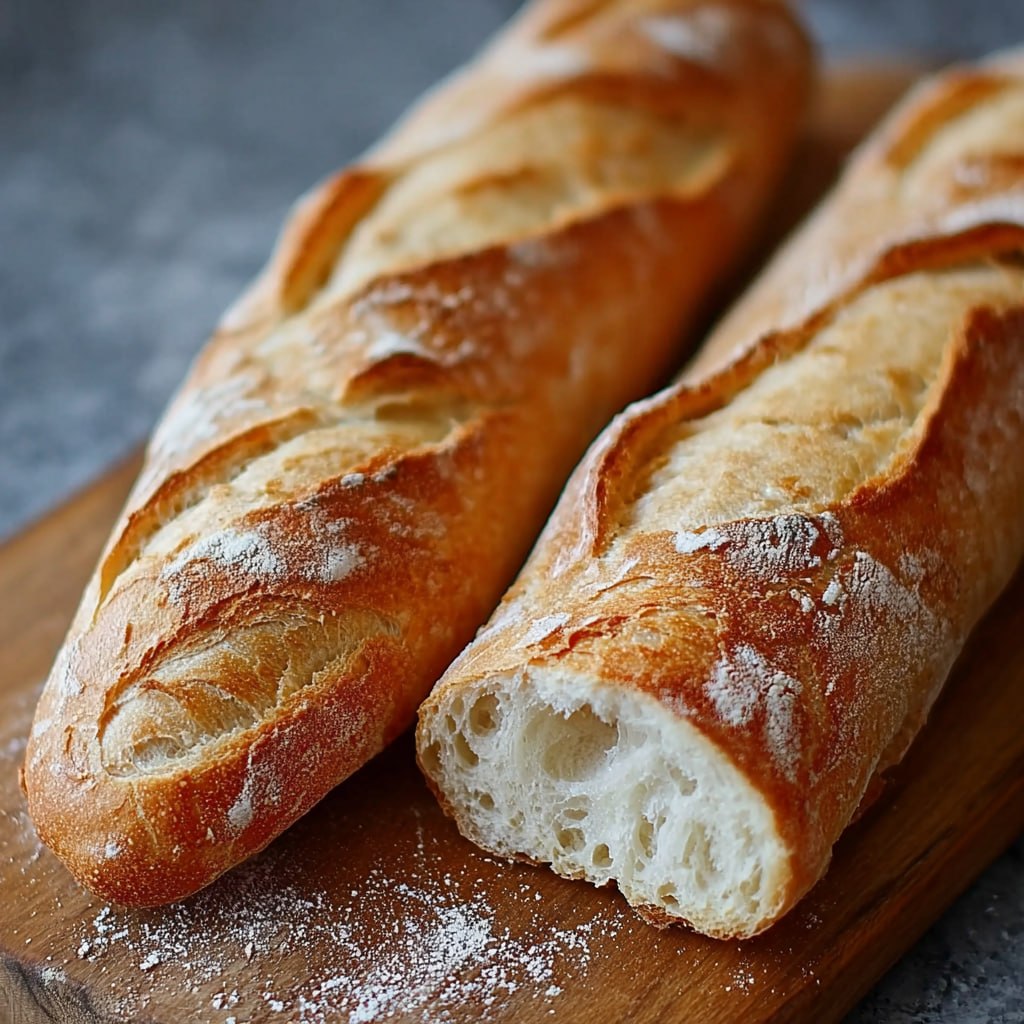
Homemade baguette with crackling crust and open, airy crumb. Real boulangerie style using a long cold ferment for deep flavor. 4 ingredients, no fancy mixer.

Introduction
Did you know that the classic French baguette is legally protected to contain just four ingredients — flour, water, salt, and yeast — yet 95% of home bakers fail to get the iconic shattering crust because they skip one detail: steam? Homemade baguette is the most rewarding loaf you’ll bake at home, and with the right technique, you can absolutely match the boulangerie at the corner. The trick is patience: a long, cold fermentation builds depth, and a hot oven with a steam burst delivers that signature crackle. No mixer, no banneton, no special flour — just time and a willingness to slash the top.
Ingredients List
- 500 g bread flour (high-protein, 12%+ — gives chewy structure)
- 360 g water, room temperature (72% hydration)
- 10 g fine sea salt
- 2 g instant yeast (about 1/2 tsp)
- Optional: 1 tbsp cornmeal for the baking surface
That’s it. Four ingredients, no oil, no sugar, no eggs — the purity is the point.
Timing
Mix and rest: 15 minutes. Cold ferment: 18–24 hours. Shape and proof: 1.5 hours. Bake: 22 minutes. Total active time: 40 minutes across two days — the cold ferment does 90% of the work for you while you sleep.
Step 1 — Mix the Dough
In a large bowl, whisk flour, salt, and yeast. Pour in water and stir with a wooden spoon until a shaggy dough forms. No kneading. Cover with plastic and rest 30 minutes (this is autolyse — it builds gluten passively).
Step 2 — Stretch and Fold
Wet your hand. Reach under the dough, stretch it up, and fold over itself. Rotate the bowl 90° and repeat 3 more times. This builds strength gently. Cover and rest 30 minutes; repeat 2 more times for a total of 3 stretch-and-folds.
Step 3 — Cold Ferment
Cover tightly and refrigerate 18–24 hours. The slow rise develops the wheat flavor and the open crumb. Pro tip: longer = tangier; 22 hours is the sweet spot.
Step 4 — Shape the Baguettes
Turn dough onto a floured surface. Divide into 2 portions. Gently flatten each into a rectangle, fold the top down, fold the bottom up, then roll into a 14-inch log. Don’t degas too much — those bubbles are gold.
Step 5 — Final Proof
Place baguettes seam-side down on parchment dusted with flour or cornmeal. Cover with a kitchen towel and let proof at room temp 60–75 minutes until visibly puffy.
Step 6 — Bake with Steam
Preheat oven to 475°F (245°C) with a baking stone or upside-down sheet pan inside, plus a metal pan on the bottom rack. Just before baking, slash each baguette diagonally 3 times with a sharp blade. Slide onto the hot stone and pour 1 cup boiling water into the bottom pan. Bake 22 minutes until deeply golden.
Nutritional Information
- Calories: 120 per slice (1.5 oz slice)
- Protein: 4 g
- Fat: 0.5 g
- Carbs: 24 g
- Fiber: 1 g
- Sodium: 270 mg
Naturally low in fat with a moderate sodium level — and far cleaner than commercial baguettes loaded with conditioners.
Healthier Alternatives for the Recipe
Use 50% whole wheat flour for a heartier, fiber-rich loaf — increase water by 20 g. Try spelt or kamut flour for ancient-grain depth. Cut sodium 30% by reducing salt to 7 g. For a sourdough version, replace yeast with 100 g active sourdough starter and reduce water by 50 g.
Serving Suggestions
Slice fresh and serve with cultured butter and flaky salt, drag through olive oil and balsamic, or layer with brie, jambon, and cornichons for a classic French sandwich. Toast leftover slices for crostini, croutons, or a Caesar salad base. Hosting? Tear and serve alongside a charcuterie board with terrine and pickles.
Common Mistakes to Avoid
- Using all-purpose flour — too low protein. The crumb will be tight and dense.
- Skipping the cold ferment — flavor stays flat and one-dimensional.
- Over-kneading — destroys the open crumb. Stretch-and-folds only.
- Forgetting steam — no shattering crust. The water pan is non-negotiable.
- Slashing too shallow — the bread won’t open. Cut 1/4 inch deep at a 30° angle.
Storing Tips for the Recipe
Best eaten the same day — that’s the boulangerie reality. Wrap in a paper bag overnight. To keep longer, slice and freeze in zip bags up to 2 months; toast straight from frozen. Avoid plastic at room temp — it softens the crust. Make-ahead tip: shape baguettes and refrigerate 6 hours before final proof and bake.
Conclusion
A real homemade baguette is the holy grail of home baking — and it’s far less mysterious than it looks. Master the cold ferment, the steam bake, and the slash, and you’ll have golden, crackling loaves with airy crumb every time. Try the recipe this weekend, photograph the crust, leave a comment with your favorite serving, and subscribe for more boulangerie-style breads.
FAQs
Why is my crust soft? Insufficient steam. Use a metal pan + boiling water + a hot stone.
Can I skip the cold ferment? You can, but you lose 80% of the flavor.
What if I don’t have a baking stone? Use an inverted heavy sheet pan, preheated for 45 minutes.
How do I know it’s done? Internal temp 205°F or hollow tapping sound.
Sourdough version? Replace yeast with 100 g starter; reduce water 50 g.
How do I get more bubbles? Wetter dough (75–78% hydration) and longer cold ferment.