Follow Me On Social Media!
The Comfort Architect: Creamy Potato Soup

The Gastronomic Architecture: The “Amylopectin” Emulsion
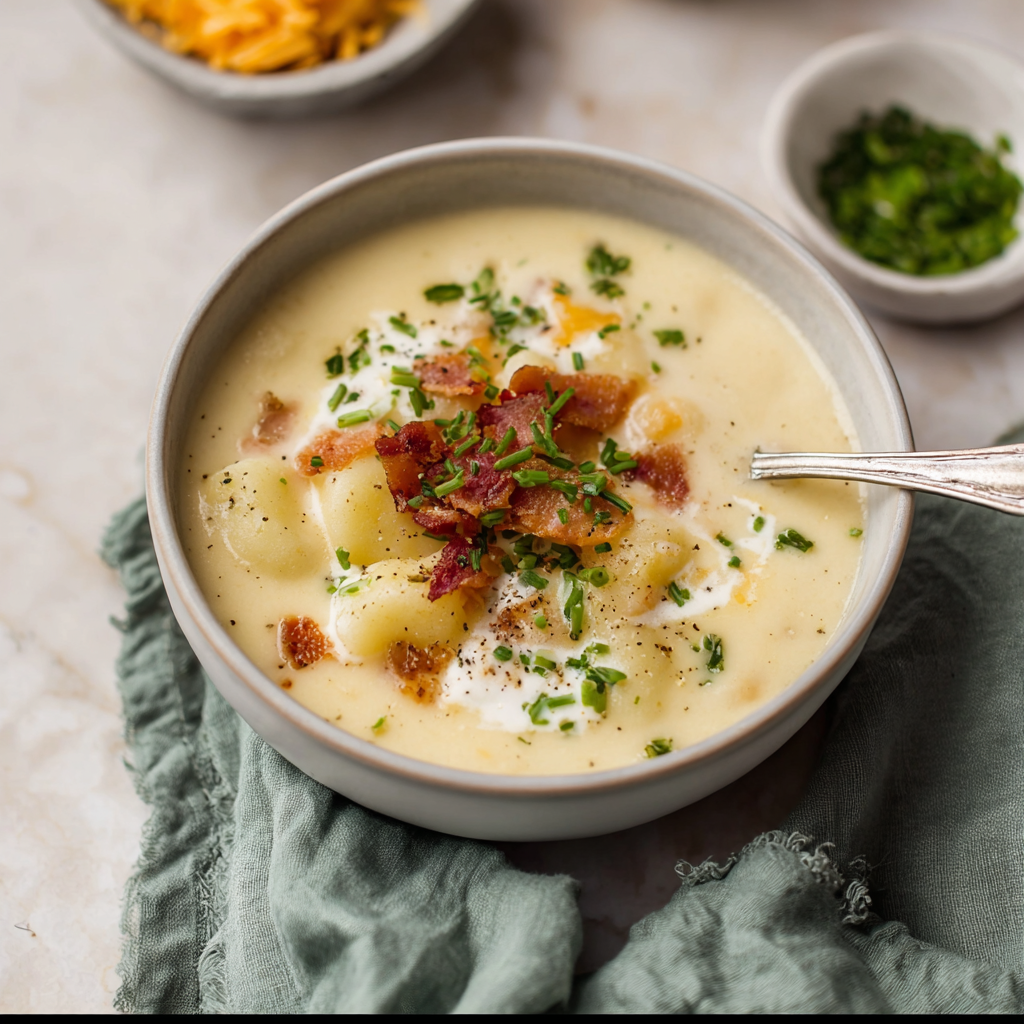
In the hierarchy of soup engineering, Creamy Potato Soup represents a sophisticated study in Starch Gelatinization and Lipid Stabilization. The technical challenge of potato soup is achieving a “Silky-Thick” body without it becoming “Gluey.” This is a function of the potato’s cellular structure: when over-blended, potatoes release excess amylopectin, which creates a gummy texture. By utilizing a “Partial-Mash” technique, you create a natural starch-bridge that thickens the broth while maintaining distinct structural “islands” of potato for textural contrast.
The “irresistibility” factor is driven by the Salty-Starch-Fat Triad: the high potassium in potatoes acts as a flavor-carrier for the sodium in the bacon and the fats in the heavy cream, creating a high-density satisfaction profile.
Essential Mise en Place: Technical Specs
To achieve a restaurant-grade “velvet” finish and a deep savory base, the variety of potato and the “Aromatic Foundation” are the most critical factors.
The Foundation (The Protein & Starch)
- Yukon Gold Potatoes (1 kg): Technical Requirement: Yukon Golds are “all-purpose” with a medium starch content and a buttery hue. Unlike Russets (which fall apart completely) or Red potatoes (which stay too firm), Yukons provide the perfect balance of creaminess and structural integrity.
- Smoked Bacon (150g): To provide the initial “rendered fat” layer and a smoky saline depth.
- Chicken or Vegetable Stock (1 Liter): The aqueous base for the simmering phase.
The “Velouté” Matrix
- Heavy Cream (250ml): To provide the lipid-mouthfeel and stabilize the starch emulsion.
- The “Mirepoix” Duo: Finely diced yellow onion and celery. (Carrots are optional, but can distract from the ivory aesthetic).
- Aromatics: Fresh thyme, 3 cloves of minced garlic, and a pinch of ground nutmeg (to amplify the dairy notes).
The Masterclass: Step-by-Step Culinary Execution
Phase 1: The “Fat-Rendering” Base
In a large pot, cook the diced bacon until crispy. Remove the bacon with a slotted spoon, leaving the rendered fat in the pan. This fat has a higher “flavor-density” than butter or oil and serves as the primary cooking medium for your aromatics.
Phase 2: The “Aromatic-Sweat”
Add the onions and celery to the bacon fat. Cook over medium heat until translucent. Add the garlic and thyme at the very end to prevent the garlic from burning and turning bitter.
Phase 3: The “Hydrolysis” Simmer
Add the cubed potatoes and stock. Bring to a boil, then reduce to a simmer for 15–20 minutes. Technical Requirement: Cook only until the potatoes are “fork-tender.” Overcooking at this stage leads to the “mushy” texture mentioned earlier.
Phase 4: The “Selective-Mash” Finish
Remove about 2 cups of the soup and blend it (or use an immersion blender for 10 seconds). Stir the purée back into the pot with the heavy cream. This creates a “Dual-Texture” matrix—a creamy, thick base with soft potato chunks. Stir in the reserved crispy bacon and fresh chives at the very end.
Common Technical Pitfalls to Avoid
- The “Gluey” Texture: Caused by using a high-speed blender for the entire batch. Potatoes are cells full of starch; high-shear blending ruptures these cells. Use a potato masher for a more rustic, superior mouthfeel.
- Bland Profile: Potatoes are “Flavor Sponges” that require significant salt. Taste and season in layers—once after adding the stock, and again after adding the cream.
- The “Thin” Soup: If the soup isn’t thick enough, allow it to simmer uncovered for an additional 10 minutes. The natural evaporation will concentrate the starches.
Frequently Asked Questions (Q&A)
| Question | Expert Answer |
|---|---|
| Can I make it vegan? | Yes. Substitute bacon fat with olive oil and use Full-Fat Cashew Cream or coconut milk for the dairy component. |
| Why add nutmeg? | Nutmeg contains myristicin, which chemically complements the “sweet-cream” profile of dairy and the earthiness of potatoes. |
| Can I freeze it? | Potatoes can become “grainy” when frozen and thawed. If you must freeze, do so before adding the cream, then add fresh cream when reheating. |