Follow Me On Social Media!
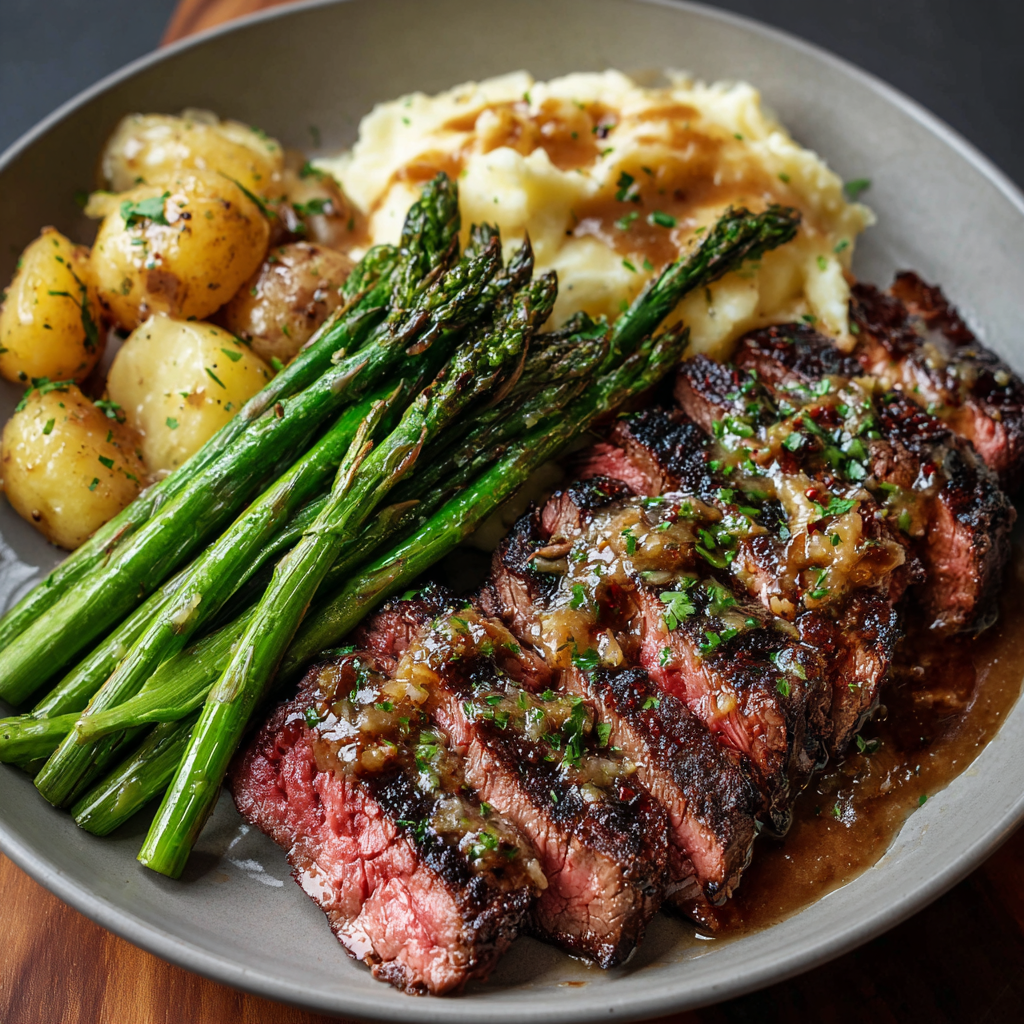
The Culinary Architect: Bavette Steak with Roasted Garlic Pan Sauce

The Gastronomic Architecture: The “Long-Fiber” Maillard Crust
In the hierarchy of bovine cuts, the Bavette (Sirloin Flap) represents a sophisticated study in Long-Grain Muscle Structure and High-Surface-Area Caramelization. The technical challenge of the bavette is its loose, fibrous texture: it is exceptionally flavorful but prone to toughness if the “Elasticity Threshold” is exceeded. By utilizing a High-Intensity Cast Iron Sear and a Perpendicular-Bias Cut, you maximize the tenderness of the long muscle fibers while creating a “craggy” surface that acts as a reservoir for the roasted garlic pan sauce.
The “irresistibility” factor is driven by the Allicin-Lipid-Fond Triad: the mellowed, nutty notes of roasted garlic are emulsified into the rendered beef fats and deglazed “fond” (brown bits), creating a high-density umami glaze.
Essential Mise en Place: Technical Specs
To achieve a restaurant-grade “shatter-crust” and a succulent medium-rare center, the temperature of the protein and the “Emulsion-Stability” of the sauce are the most critical factors.
The Foundation (The Protein)
- Bavette Steak (approx. 600g): Technical Requirement: Must be at room temperature before searing. Pat bone-dry with paper towels. Moisture on the surface will trigger steam, preventing the Maillard reaction.
- Neutral High-Smoke-Point Oil: Grapeseed or Avocado oil.
The “Roasted Garlic” Matrix
- Roasted Garlic (1 full head): Technical Requirement: Pre-roasted until “Paste-Soft.” This provides a sweet, caramelized base that raw garlic cannot replicate.
- Beef Stock (120ml) & Dry Red Wine (60ml): The deglazing agents.
- Cold Unsalted Butter (30g): To be “mounted” at the end for a glossy finish.
- Fresh Thyme: For a “high-frequency” herbal aromatic.
The Masterclass: Step-by-Step Culinary Execution
Phase 1: The “Radiant-Heat” Sear
Heat your skillet until it reaches the Smoke Point. Season the steak heavily with kosher salt. Sear for 3–4 minutes per side. Technical Requirement: Do not move the steak once it hits the pan. You need sustained contact to develop a “crust-shell” that locks in the internal juices.
Phase 2: The “Aromatic-Butter” Baste
During the final 2 minutes of searing, add a knob of butter and fresh thyme to the pan. Tilt the skillet and spoon the foaming butter over the steak (Arrosé technique). This provides a secondary layer of nutty, toasted flavor.
Phase 3: The “Resting” Phase (Non-Negotiable)
Transfer the steak to a warm plate and tent loosely with foil. Expert Tip: Rest for at least 8–10 minutes. This allows the muscle fibers to relax and reabsorb the internal moisture. If you cut too soon, the “myoglobin” will dump onto the board, leaving the meat dry.
Phase 4: The “Roasted-Garlic” Emulsion
In the same skillet, deglaze with wine and stock, scraping up the fond. Whisk in the Roasted Garlic Paste. Reduce by half. Remove from heat and whisk in the Cold Butter. Technical Requirement: The butter must be cold to create a stable emulsion (Beurre Monté), resulting in a sauce that is thick and glossy rather than greasy.
Common Technical Pitfalls to Avoid
- The “Chewy” Slice: Bavette must be sliced against the grain. Look at the direction of the long muscle fibers and rotate your knife 90 degrees to them.
- The “Broken” Sauce: If you boil the sauce after adding the cold butter, the emulsion will “break” and separate into oil and solids. Always mount butter off the heat.
- Overcooking: Bavette is best served Medium-Rare (54°C/130°F). Beyond medium, the long fibers become significantly more difficult to masticate.
Frequently Asked Questions (Q&A)
| Question | Expert Answer |
|---|---|
| How do I pre-roast garlic? | Cut the top off a head of garlic, drizzle with oil, wrap in foil, and bake at 200°C for 40 minutes until spreadable. |
| Can I use Flank or Skirt? | Yes. Both are “Long-Grain” cuts that behave similarly to Bavette, though Bavette generally has better intramuscular marbling. |
| Why use cold butter? | Cold butter melts slowly, allowing the milk solids to encapsulate the fat droplets, creating a “velvet” texture. |