Follow Me On Social Media!
The Culinary Architect: Brown Sugar Pineapple Chicken

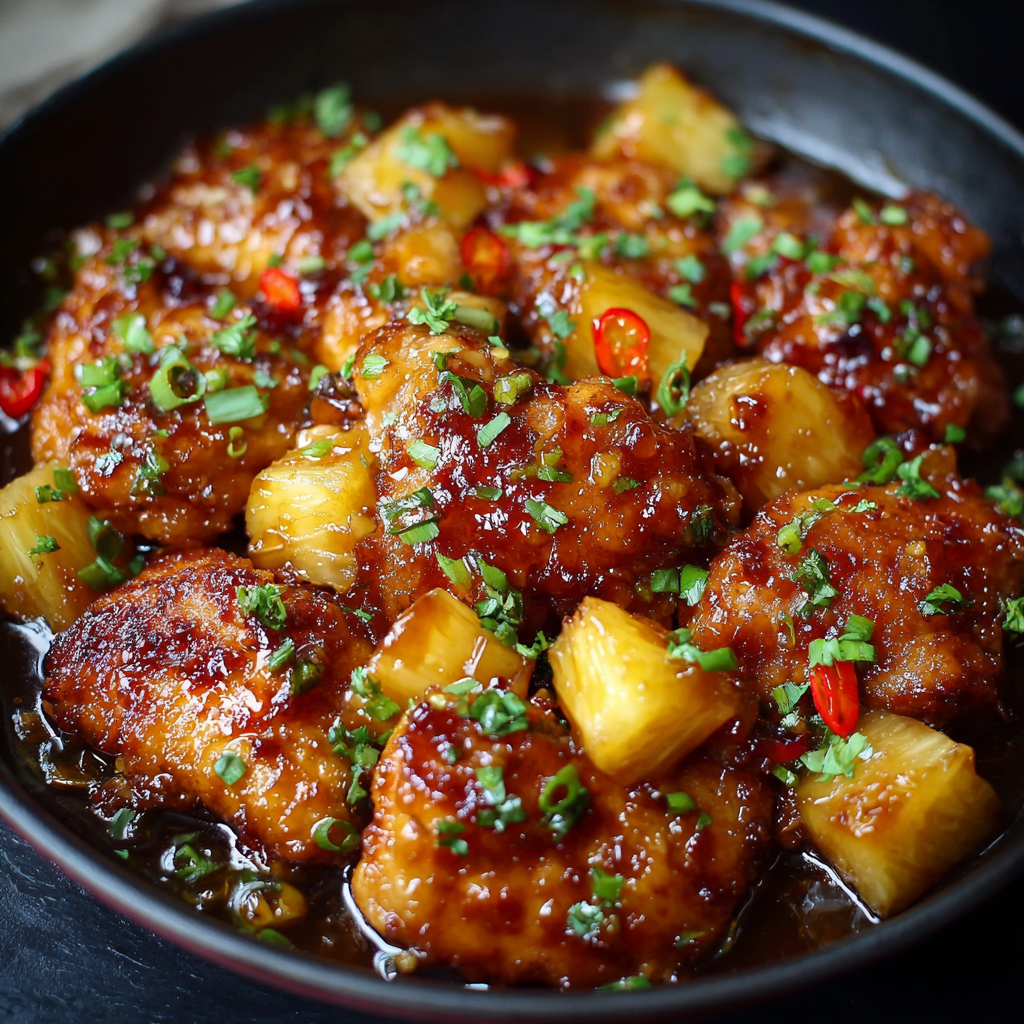
The Gastronomic Architecture: The “Enzymatic-Caramel” Fusion
In the hierarchy of fruit-integrated proteins, Brown Sugar Pineapple Chicken represents a sophisticated study in Proteolytic Tenderization and Fructose-Glucose Caramelization. The technical challenge of this dish is the “Bromelain Effect”: fresh pineapple contains an enzyme (bromelain) that breaks down protein fibers. While this tenderizes the chicken, over-exposure can lead to a “mushy” texture. By utilizing a High-Heat Sear and adding the fruit in the final Thermal Phase, you harness the acidity of the pineapple to brighten the heavy molasses notes of the brown sugar without compromising the chicken’s structural integrity.
The “irresistibility” factor is driven by the Sweet-Sour-Umami Triad: the deep caramel notes of the brown sugar, the citric-malic acidity of the pineapple, and the savory glutamates of the soy sauce create a high-density satisfaction profile.
Essential Mise en Place: Technical Specs
To achieve a restaurant-grade “glossy” glaze and succulent chicken, the surface moisture of the protein and the “Syrup-Viscosity” are the most critical factors.
The Foundation (The Protein)
- Chicken Thighs or Breasts (600g): Technical Requirement: Cut into uniform 2.5cm cubes. Thighs are preferred for their higher lipid content, which carries the sweet glaze more effectively than lean breast meat.
- Expert Tip: Pat the chicken bone-dry before seasoning. Any surface water will create steam, preventing the crucial Maillard browning.
The “Tropical-Glaze” Matrix
- Pineapple Chunks (250g): Canned (in juice) or fresh. Technical Requirement: If using canned, reserve 100ml of the juice for the sauce base.
- Light Brown Sugar (100g): To provide the molasses-rich sweetness and “tack.”
- The “Savory-Acid” Duo: 60ml Soy Sauce and 1 tbsp Rice Vinegar.
- Aromatics: 1 tbsp freshly grated ginger and 3 cloves minced garlic.
The Masterclass: Step-by-Step Culinary Execution
Phase 1: The “Maillard” Foundation
Heat oil in a large skillet over medium-high heat. Sear the chicken in batches until a deep golden crust forms on all sides. Remove the chicken. Technical Requirement: The pan must remain hot enough that the chicken “hisses” on contact. This creates the savory base (fond) that will later emulsify into the sauce.
Phase 2: The “Aromatic-Sugar” Bloom
In the same pan, add the ginger and garlic. Sauté for 30 seconds, then whisk in the brown sugar, pineapple juice, soy sauce, and vinegar. Expert Tip: Use a wooden spoon to scrape up the brown bits from the chicken. This “deglazing” integrates the meat’s savory essence into the sweet syrup.
Phase 3: The “Viscosity-Calibration”
Simmer the sauce for 5–7 minutes until it reduces by one-third. It should reach a “Nappé” consistency—thick enough to coat the back of a spoon. Technical Requirement: If the sauce is too thin, it will pool at the bottom of your bowl; if too thick, it will turn into a sticky candy.
Phase 4: The “Enzymatic” Integration
Return the chicken to the pan and add the pineapple chunks. Toss for 2–3 minutes to heat through. The heat “sets” the glaze onto the chicken, while the pineapple releases a final burst of fresh acidity to balance the sugar.
Common Technical Pitfalls to Avoid
- The “Watery” Sauce: Caused by using too much pineapple juice or not allowing the sauce to reduce sufficiently. If necessary, use a small cornstarch slurry (1 tsp cornstarch + 1 tsp water) to achieve a glossy finish.
- The “Mushy” Chicken: This occurs if you marinate the chicken in fresh pineapple juice for more than 30 minutes. The bromelain will digest the meat fibers. Always add fresh pineapple at the end.
- Burnt Sugar: Brown sugar has a lower burn point than white sugar due to the molasses. Keep the sauce at a simmer, not a rolling boil.