Follow Me On Social Media!
The Culinary Architect: Chinese Pepper Steak with Onions

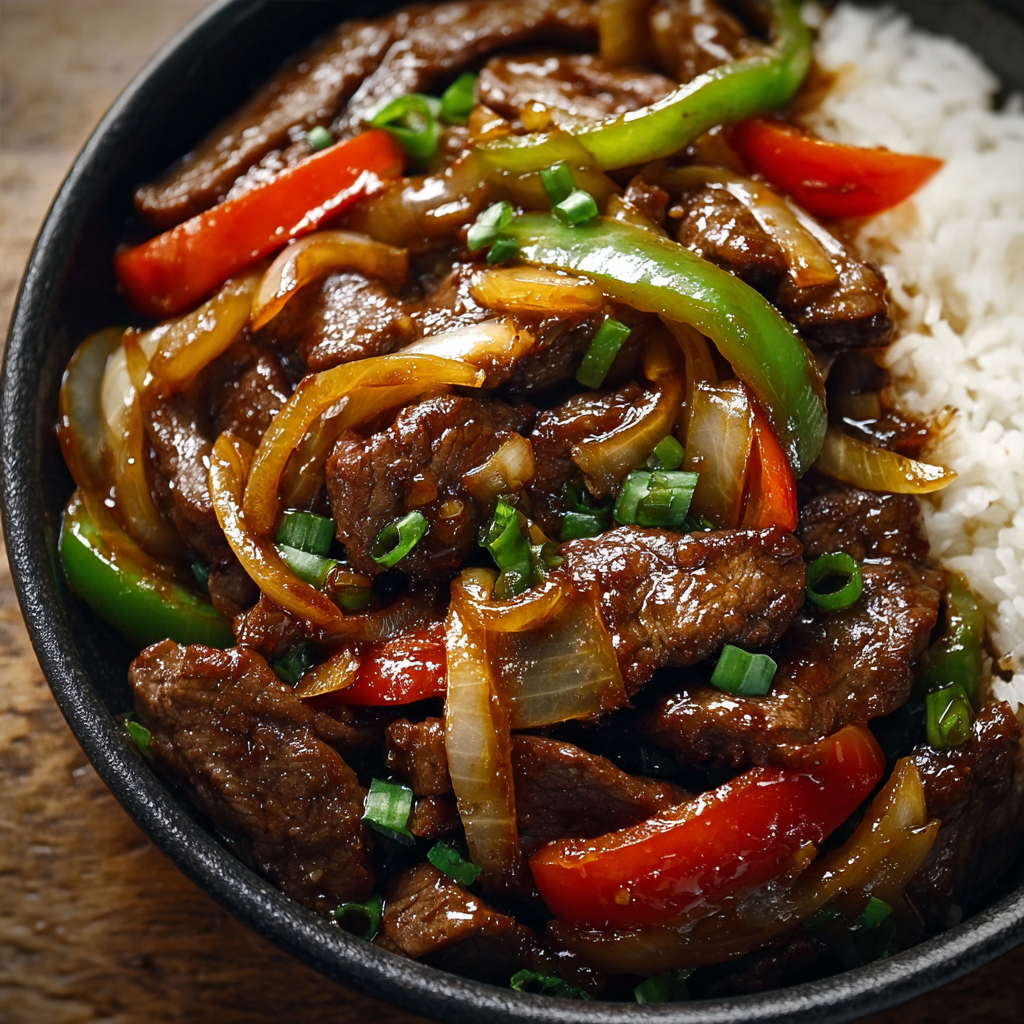
The Gastronomic Architecture: The “Velvet-Sear” Matrix
In the hierarchy of Cantonese-American wok-cooking, Chinese Pepper Steak represents a sophisticated study in Protein Tenderization and Aromatic Volatilization. The technical challenge of using lean cuts like flank or top sirloin is the “Fibrous-Resistance” paradox: these muscles have long, tough fibers that become rubbery when exposed to the intense, dry heat of a wok. By utilizing the “Velveting” technique—a pH-altering starch coating—you create a protective “Micro-Shield” that locks in moisture and physically softens the meat’s exterior, allowing for a high-intensity sear without moisture loss.
The “irresistibility” factor is driven by the Piperine-Soy-Allium Triad: the sharp heat of cracked black pepper, the savory fermented depth of soy, and the caramelized sweetness of onions.
Essential Mise en Place: Technical Specs
To achieve “Wok Hei” (the breath of the wok) and avoid a “grey” or “steamed” texture, the slicing angle and the “Flash-Point” of the oil are the most critical factors.
The Foundation (The Protein)
- Flank or Top Sirloin Steak (500g): Technical Requirement: Slice against the grain into 3mm strips. Slicing against the grain mechanically shortens the muscle fibers, ensuring maximum tenderness.
- The “Velveting” Slurry: 1 tbsp Cornstarch, 1 tbsp Soy Sauce, and 1 tsp Toasted Sesame Oil.
The “Serrated” Aromatics
- Green Bell Peppers (2 medium): Cut into 2cm squares to provide a “High-Crunch” contrast.
- Yellow Onion (1 large): Sliced into thick wedges.
- The “High-Frequency” Sauce: 120ml Beef Stock, 2 tbsp Oyster Sauce, 1 tbsp Soy Sauce, and 2 tsp coarsely cracked Black Pepper.
The Masterclass: Step-by-Step Culinary Execution
Phase 1: The “Velveting” Incubation
Toss the sliced beef in the cornstarch slurry and let it rest for 20 minutes. Technical Requirement: The cornstarch creates a “slippery” exterior that prevents the beef from sticking to itself and provides the starch necessary to thicken the sauce later.
Phase 2: The “Flash-Point” Sear
Heat a wok or heavy skillet until it reaches the Smoke Point. Add a high-smoke-point oil (like peanut or vegetable). Add the beef in a single layer. Expert Tip: Do not stir immediately. Let the beef develop a deep, dark sear for 60 seconds before tossing. Remove the beef while it is still slightly pink in the center.
Phase 3: The “Aromatic-Snap” Sauté
In the same wok, add the onions and peppers. Sauté over high heat for 2–3 minutes. Technical Requirement: You want “Blistered Edges” but a raw, crunchy core. If you cook them until soft, the dish loses its structural contrast. Add minced ginger and garlic during the final 30 seconds to prevent burning.
Phase 4: The “Glossy-Reduction” Finish
Return the beef to the wok. Pour in the sauce mixture. Toss rapidly over high heat for 60 seconds. The cornstarch from the “Velveting” phase will react with the liquid, instantly creating a thick, glossy lacquer that coats every surface.
Common Technical Pitfalls to Avoid
- The “Steamed” Beef: Caused by overcrowding the wok. If you add too much meat at once, the temperature drops and the beef releases its juices, boiling rather than searing. Cook in two batches if necessary.
- Bland Profile: Black pepper loses its potency quickly. Use Freshly Cracked Pepper rather than pre-ground for a “high-frequency” spicy kick.
- The “Soggy” Vegetable: Do not add the sauce until the vegetables are charred. The liquid will halt the Maillard reaction and start the steaming process.
Frequently Asked Questions (Q&A)
| Question | Expert Answer |
|---|---|
| Why use Oyster Sauce? | It provides “Briny-Umami” depth and the sugar necessary for the sauce to caramelize and become glossy. |
| Can I make it spicier? | Add a teaspoon of Chili Garlic Sauce or sliced fresh Thai bird’s eye chilies to the aromatic phase. |
| Best side dish? | Serve over Steamed Jasmine Rice to absorb the rich, peppery gravy without competing with the steak’s flavor. |