Follow Me On Social Media!
The Culinary Architect: Classic Chicken Fried Chicken

The Gastronomic Architecture: The “Double-Dredge” Structural Shell
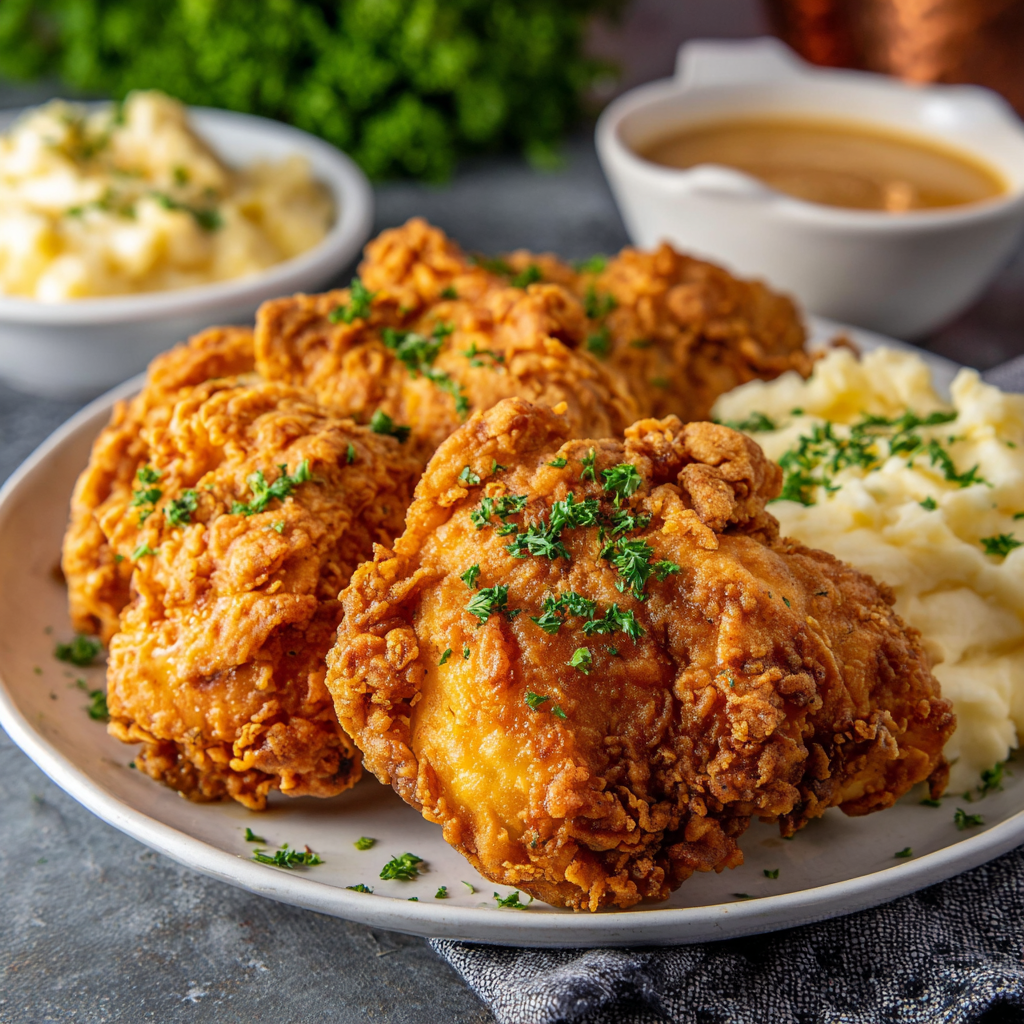
In the hierarchy of Southern-American comfort engineering, Chicken Fried Chicken represents a sophisticated study in Starch-Protein Adhesion and Lactic-Acid Tenderization. The technical challenge of “Chicken Fried” preparation—distinct from traditional fried chicken—is the “Coating-Shear” paradox: the breading must be thick enough to mimic a steak’s crust but adhesive enough to stay bonded to the breast during slicing. By utilizing a Buttermilk Brine and a Double-Flour Dredge, you create a “Multilayered Starch Matrix” that hydrates into a rugged, “shatter-crisp” exterior while the interior remains succulent.
The “irresistibility” factor is driven by the Peppery-Lactic-Maillard Triad: the high-frequency heat of black pepper, the creamy tang of the white gravy, and the deep savory notes of the fried crust.
Essential Mise en Place: Technical Specs
To achieve a restaurant-grade “shatter-crunch” and prevent the common “Sliding-Crust” failure, the uniform thickness of the protein and the “Dredge-Hydration” time are the most critical factors.
The Foundation (The Protein)
- Chicken Breasts (600g): Technical Requirement: Pound the breasts to a uniform 1.5cm thickness. This ensures synchronized cooking and creates a flat surface area for maximum crust adhesion.
- The “Buttermilk-Lactic” Bath: 250ml Buttermilk and 1 egg. The acid in the buttermilk breaks down the surface proteins, ensuring the meat is tender.
The “Shatter-Crust” Dredge
- All-Purpose Flour (300g): The primary structural builder.
- Cornstarch (50g): Expert Tip: Adding cornstarch interferes with gluten development, resulting in a brittler, crunchier crust than flour alone.
- The “High-Frequency” Spices: 2 tsp Black Pepper (coarsely ground), 1 tsp Garlic Powder, 1 tsp Smoked Paprika, and 1 tsp Salt.
The Masterclass: Step-by-Step Culinary Execution
Phase 1: The “Structural-Pounding”
Place chicken between plastic wrap and pound to a uniform thickness. Technical Requirement: Uniformity is essential; otherwise, the edges will over-extract (dry out) before the center reaches the safe thermal threshold.
Phase 2: The “Double-Dredge” Matrix
Dip the chicken in the buttermilk, then the flour. Repeat the process (Buttermilk → Flour again). Expert Tip: After the second dredge, let the chicken rest on a wire rack for 10 minutes. This allows the flour to “hydrate” and bond to the chicken, creating a “biological glue” that prevents the breading from falling off in the pan.
Phase 3: The “Shallow-Radiant” Fry
Heat 1cm of neutral oil in a heavy skillet to 175°C (350°F). Fry the chicken for 4–5 minutes per side. Technical Requirement: You are looking for a deep “Mahogany-Gold.” If the oil is too hot, the crust will burn before the interior hits 74°C (165°F); if too cool, the crust will absorb oil and become “greasy.”
Phase 4: The “White-Gravy” Emulsion
In the same pan (after removing excess oil), whisk 2 tbsp of flour into 2 tbsp of the hot fat (the roux). Slowly whisk in 300ml of whole milk and heavy black pepper. Simmer until it reaches a “Velvet-Gloss” consistency. Pour immediately over the hot chicken.
Common Technical Pitfalls to Avoid
- The “Soggy-Core”: Caused by serving the gravy too early or letting the chicken sit. Pour the gravy just seconds before consumption to preserve the “Shatter-Crisp” integrity of the crust.
- The “Breading-Gap”: If the crust separates from the meat, it’s usually because the chicken was wet before the first dredge. Always pat the meat dry before the initial dip.
- The “Peppery-Flatness”: White gravy requires a massive amount of black pepper to achieve its signature “High-Frequency” bite. Taste and adjust the pepper levels during the simmer.
Frequently Asked Questions (Q&A)
| Question | Expert Answer |
|---|---|
| Why “Chicken Fried”? | The term refers to cooking chicken in the same style as “Chicken Fried Steak”—pounded thin, double-breaded, and served with white cream gravy. |
| Can I use an Air Fryer? | Yes, but you must spray the flour-dredge heavily with oil. Without a lipid-interface, the flour will remain dry and “dusty” rather than turning into a crust. |
| What is the best oil? | Use Peanut Oil or Canola Oil. They have high smoke points and neutral flavor profiles that allow the black pepper and buttermilk to shine. |