Follow Me On Social Media!
The Culinary Architect: One-Pan Creamy Herb Chicken & Potatoes

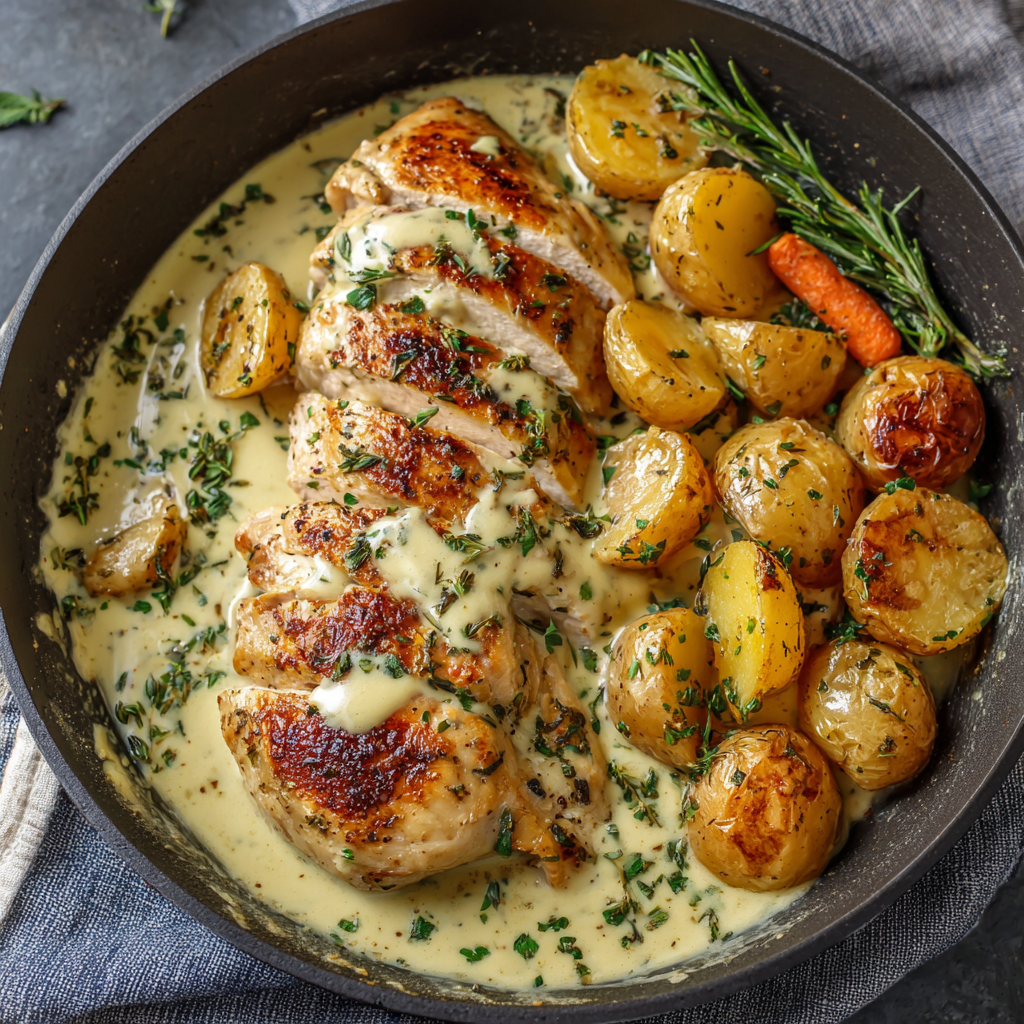
The Gastronomic Architecture: The “Amylopectin-Lactic” Bond
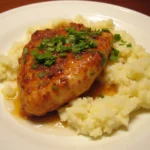
In the hierarchy of high-efficiency comfort dining, Creamy Herb Chicken & Potatoes represents a sophisticated study in Starch Gelatinization and Lipid Emulsification. The technical challenge of a one-pan potato dish is the “Thermal-Lag”: potatoes require a longer “Radiant-Heat” exposure than chicken breasts to reach a cloud-like interior. By utilizing a Two-Stage Searing Process, you harness the potato’s released starch to naturally thicken the herbal cream sauce, creating a glossy “velvet” coating that prevents the protein from reaching its “Dry-Out Point.”
The “irresistibility” factor is driven by the Terpene-Lipid Loop: the essential oils in fresh rosemary and thyme are fat-soluble, meaning they “bloom” when sautéed in butter, deeply infusing the cream and chicken fibers.
Essential Mise en Place: Technical Specs
To achieve a restaurant-grade “shatter-crisp” potato edge and succulent chicken, the uniform surface area of the vegetables and the “Fond-Extraction” are the most critical factors.
The Foundation (The Protein & Starch)
- Chicken Thighs or Cutlets (600g): Technical Requirement: Use skin-on thighs for maximum lipid rendering, or pound breasts to a uniform 1.5cm thickness for synchronized cooking.
- Baby Potatoes (500g): Expert Tip: Halve them to expose the “Starchy-Face.” This flat surface area is where the Maillard reaction occurs, providing the necessary texture.
The “Herbal-Cream” Matrix
- Heavy Cream (250ml): The high-fat base prevents curdling when meeting the acidic wine or stock.
- Chicken Stock (120ml) & Dry White Wine (60ml): The deglazing agents.
- Fresh Herb Triad: Rosemary, Thyme, and Oregano (finely minced).
- Aromatics: 4 cloves garlic and 1 small shallot.
The Masterclass: Step-by-Step Culinary Execution
Phase 1: The “Radiant-Starch” Sear
Heat oil and butter in a large skillet. Place potatoes face-down. Sear for 8–10 minutes without moving them until the faces are deep “mahogany-gold.” Remove and set aside. Technical Requirement: This phase partially cooks the potato while creating a crisp crust that will survive the simmering process.
Phase 2: The “Maillard-Fond” Formation
Season the chicken and sear in the same pan for 3–4 minutes per side. Remove the chicken. Technical Requirement: The brown bits (fond) left in the pan contain concentrated umami and starch—do not clean the pan.
Phase 3: The “Aromatic-Acid” Deglaze
Add shallots and garlic to the pan for 60 seconds. Pour in the wine and stock, scraping the bottom with a wooden spoon. Expert Tip: Reduction is key. Simmer until the liquid reduces by half to concentrate the “High-Frequency” flavors.
Phase 4: The “Velouté” Simmer
Whisk in the heavy cream and fresh herbs. Return the chicken and potatoes (crispy side up) to the pan. Simmer for 10–12 minutes. Technical Requirement: The potatoes finish cooking in the cream, releasing starch that “tightens” the sauce into a rich glaze.
Common Technical Pitfalls to Avoid
- The “Rubbery” Chicken: Caused by boiling the chicken in the cream. Ensure the sauce is at a low simmer, not a rolling boil, to keep the protein fibers tender.
- The “Soggy” Potato: If you submerge the crispy faces of the potatoes in the sauce, they will lose their crunch. Keep the seared faces above the liquid line.
- Sauce Separation: Avoid using low-fat milk. The high heat and acidity of the herbs/wine will cause the milk proteins to clump.
Frequently Asked Questions (Q&A)
| Question | Expert Answer |
|---|---|
| Can I use dried herbs? | Yes, but use 1/3 the amount. Dried herbs are more concentrated but lack the bright “Chlorophyll” notes of fresh. |
| How do I know the potatoes are done? | Use a paring knife. If it slides into the center of the largest potato with zero resistance, the starch has fully gelatinized. |
| Best wine to use? | A high-acid Sauvignon Blanc or Pinot Grigio cuts through the heavy cream best. |