Follow Me On Social Media!
The Culinary Architect: One-Pot Southwest Ground Beef Pasta

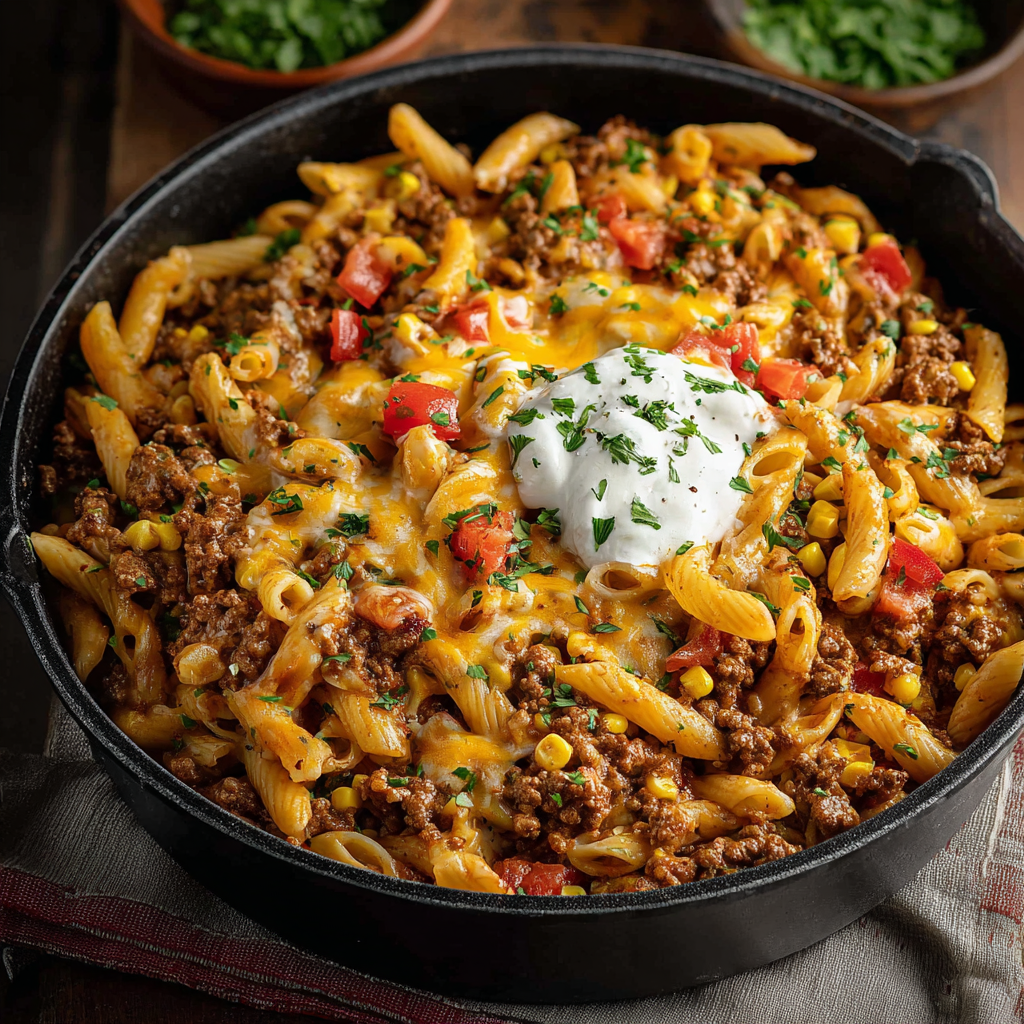
The Gastronomic Architecture: The “Starch-Capsaicin” Emulsion
In the hierarchy of high-efficiency regional fusion, Southwest Ground Beef Pasta represents a sophisticated study in Lipid-Starch Binding and Aromatic Volatilization. The technical challenge of this dish is the “Flavor-Absorption” paradox: pasta is a neutral starch that requires an acidic and savory liquid to become flavorful. By utilizing a “One-Pot” method, you trap the Amylose (starch) released by the pasta, which emulsifies with the beef fats and tomato acidity to create a glossy, “velvet” sauce that clings to every spiral.
The “irresistibility” factor is driven by the Cumin-Lime-Glutamate Triad: the earthy depth of cumin, the bright citric acid of lime, and the savory beef glutamates create a high-density satisfaction profile that mimics the complexity of traditional Tex-Mex slow-cooks.
Essential Mise en Place: Technical Specs
To achieve a restaurant-grade “homogeneous” sauce and avoid the common “watery” finish, the fat-to-lean ratio of the beef and the “Pasta-to-Liquid” ratio are the most critical factors.
The Foundation (The Protein & Grain)
- Ground Beef (500g): Technical Requirement: Use 85/15 lean-to-fat. The rendered fat is essential for “blooming” the spices.
- Short Pasta (350g): Rotini or Campanelle. These shapes have a high “Surface-to-Volume” ratio, acting as “Flavor Scoops” for the corn and beans.
- Beef Stock (600ml) & Diced Tomatoes (400g): The aqueous base.
The “Southwest” Matrix
- The “Black-and-Gold” Duo: 1 can Black Beans (rinsed) and 1 cup Corn (frozen or charred).
- The “High-Frequency” Spices: 1 tbsp Chili Powder, 1 tsp Cumin, 1 tsp Smoked Paprika, and 1/2 tsp Garlic Powder.
- The “Lactic” Finish: 150g Pepper Jack or Sharp Cheddar cheese.
The Masterclass: Step-by-Step Culinary Execution
Phase 1: The “Maillard” Foundation
In a large, deep skillet, brown the beef with diced onions. Technical Requirement: Do not drain the fat immediately. Add your dry spices to the rendering fat for 60 seconds. This “Blooming” process dissolves the fat-soluble flavor compounds in the spices, intensifying the aromatic profile.
Phase 2: The “Aqueous-Starch” Integration
Add the dry pasta, beef stock, and diced tomatoes (with their juice). Expert Tip: Ensure the pasta is just submerged. As the liquid boils, the “Mechanical Agitation” of the bubbles will rub starch off the pasta, thickening the sauce in-situ.
Phase 3: The “Hydrophobic” Inclusion
Midway through the pasta’s cooking time, fold in the black beans and corn. These ingredients provide “Structural Contrast”—the creamy bean and the “pop” of the corn break up the soft texture of the pasta and beef.
Phase 4: The “Zero-Heat” Emulsion
Once the pasta is al dente and the liquid has reduced to a thick glaze, remove from heat. Stir in the cheese and a squeeze of fresh lime juice. Technical Requirement: Adding the cheese off the heat prevents the proteins from “seizing” and turning stringy, resulting in a perfectly smooth, creamy finish.
Common Technical Pitfalls to Avoid
- The “Mushy” Pasta: Caused by adding too much stock. Start with 600ml; you can always add a splash more if the pasta isn’t cooked, but you cannot easily remove it.
- Bland Profile: Southwest flavors rely on acidity. If the dish feels “heavy,” add more Lime Juice or a tablespoon of Pickled Jalapeño Brine to brighten the palate.
- The “Grey” Sauce: Caused by using under-seasoned beef. Ensure the spices are toasted in the fat before adding the liquid to maintain a vibrant, mahogany color.
Frequently Asked Questions (Q&A)
| Question | Expert Answer |
|---|---|
| Can I make it creamy? | Yes. Stir in 1/4 cup of Sour Cream or heavy cream at the very end for a “Southwest Stroganoff” profile. |
| Why black beans? | They provide a “Fiber-Mouthfeel” that complements the ground beef and increases the satiety index of the meal. |
| Can I use Turkey? | Yes, but increase the cumin and salt, as turkey has a lower “Umami Density” than beef. |