Follow Me On Social Media!
The Culinary Architect: Savory Breakfast Monkey Bread

The Gastronomic Architecture: The “Tear-and-Share” Structural Matrix
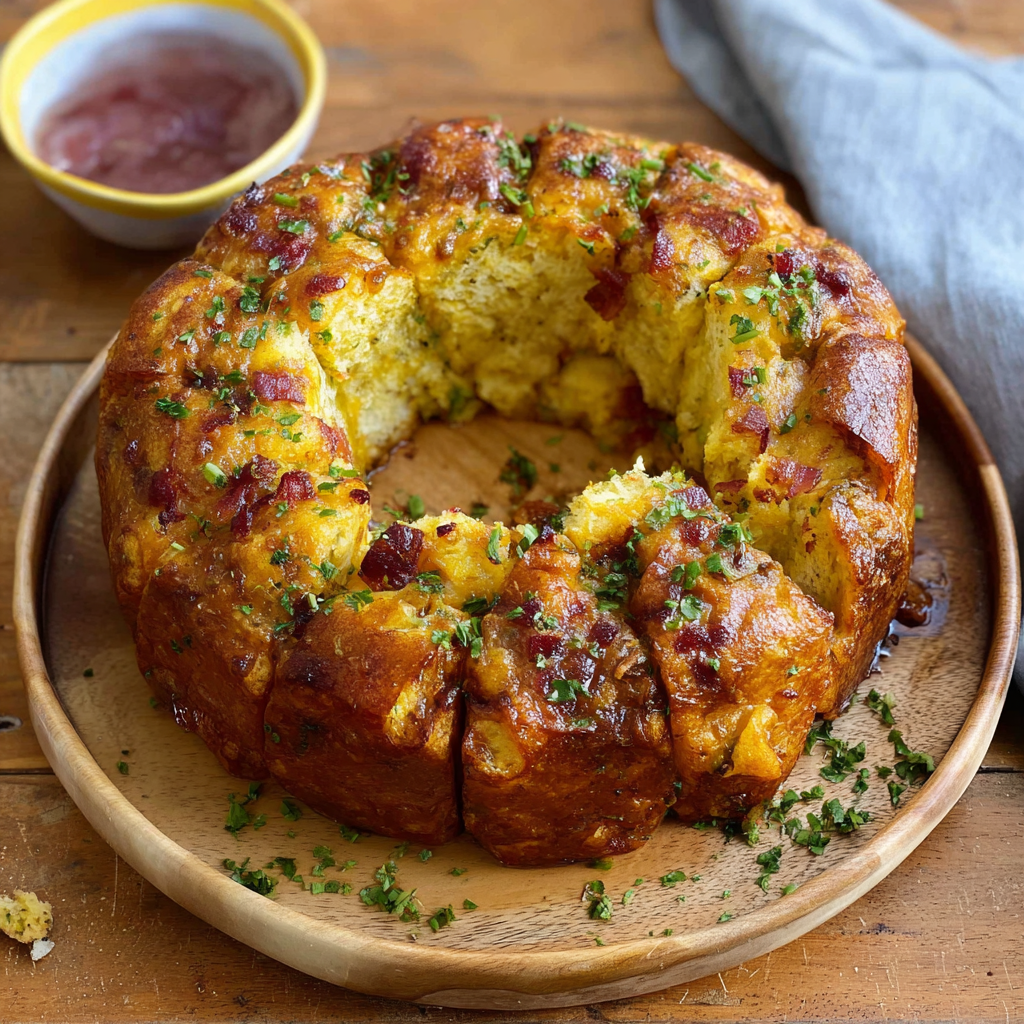
In the hierarchy of communal dining, Savory Monkey Bread represents a sophisticated study in Mechanical Adhesion and Lipid-Starch Surface-Area Maximization. The technical challenge of monkey bread is the “Center-Dough” paradox: the outer spheres of dough receive direct radiant heat and brown via the Maillard reaction, while the interior pieces are insulated and rely on steam. By utilizing a Bundt Pan Geometry—with its central hollow tube—you increase the surface area exposed to thermal energy, ensuring the interior dough “pulls apart” cleanly rather than remaining a homogenous, gummy mass.
The “irresistibility” factor is driven by the Alliaceous-Lipid-Glutamate Triad: the sulfurous garlic, the high-fat butter, and the savory cheese create a flavor profile that activates multiple taste receptors simultaneously.
Essential Mise en Place: Technical Specs
To achieve a restaurant-grade “shatter-crisp” exterior and a fluffy, pillow-like interior, the uniformity of the dough spheres and the “coating” technique are the most critical factors.
The Foundation (The Dough & Protein)
- Refrigerated Biscuit Dough (approx. 2 cans/800g): Technical Requirement: Quarter each biscuit into 4 uniform pieces. This creates a high surface-area-to-volume ratio, allowing more room for savory coatings.
- Cooked Breakfast Sausage or Bacon (200g): Expert Tip: If using bacon, cook it until “shatter-crisp.” Soft bacon will become chewy and “leathery” once encased in the dough.
The “Savory-Glaze” Matrix (The Coating)
- Unsalted Butter (125g, melted): The primary fat carrier for the seasonings.
- The “Alliaceous” Blend: 4 cloves minced garlic and 1 tsp onion powder.
- The “Green” Notes: 2 tbsp fresh parsley and 1 tbsp chives.
- The “Umami” Shell: 150g shredded Sharp Cheddar or Gruyère and 50g grated Parmesan.
The Masterclass: Step-by-Step Culinary Execution
Phase 1: The “Spherical” Prep
Quarter the dough pieces and roll them into rough spheres. Technical Requirement: Do not over-handle the dough. Excessive manipulation develops too much gluten, which will make the monkey bread “rubbery” rather than tender.
Phase 2: The “Multi-Layer” Dredge
Dip each dough sphere into the melted garlic butter, then toss in a mixture of the cheese and herbs. Expert Tip: Using a “Wet-Hand/Dry-Hand” method prevents your fingers from becoming encased in a “dough-cheese” paste, ensuring each sphere is cleanly coated.
Phase 3: The “Stratified” Assembly
Generously grease a Bundt pan. Layer half of the dough spheres, then sprinkle with half of the cooked sausage and cheese. Repeat the layers. Technical Requirement: Do not pack the spheres tightly. Leaving small “air-voids” allows steam to circulate and the bread to expand (rise) during the bake.
Phase 4: The “Radiant” Bake
Bake at 175°C (350°F) for 30–35 minutes. Technical Requirement: The bread is finished when the top is a deep “mahogany-gold” and the internal temperature of the center dough reaches 88°C (190°F). Let it rest in the pan for 5 minutes before inverting; this allows the melted cheese to “set” slightly so the structure doesn’t collapse.
Common Technical Pitfalls to Avoid
- The “Gummy” Center: Usually caused by removing the bread too early. If the top is browning too fast but the center feels soft, tent the pan with aluminum foil for the final 10 minutes to protect the surface while the core finishes cooking.
- The “Stuck” Bread: Ensure you grease every crevice of the Bundt pan with butter or non-stick spray. The high sugar and protein content in the cheese can act as a “glue” if the surface isn’t properly lubricated.
- The “Soggy” Bottom: If you use too much butter, it can pool at the bottom of the pan. Stick to the specified ratios to ensure the dough “absorbs” the fat rather than “swimming” in it.
Frequently Asked Questions (Q&A)
| Question | Expert Answer |
|---|---|
| Can I add vegetables? | Yes. Diced bell peppers or jalapeños provide a “High-Acid” snap. Sauté them briefly to remove excess moisture before adding. |
| Why use a Bundt pan? | The central tube provides a “secondary heat source,” cooking the bread from the inside and outside simultaneously for a uniform bake. |
| How do I reheat it? | Use an oven at 150°C for 10 minutes. The microwave will make the fat-soaked dough “tough” and “rubbery.” |