Follow Me On Social Media!
The Masterclass: Artisanal Sharp Cheddar Mornay for Fries

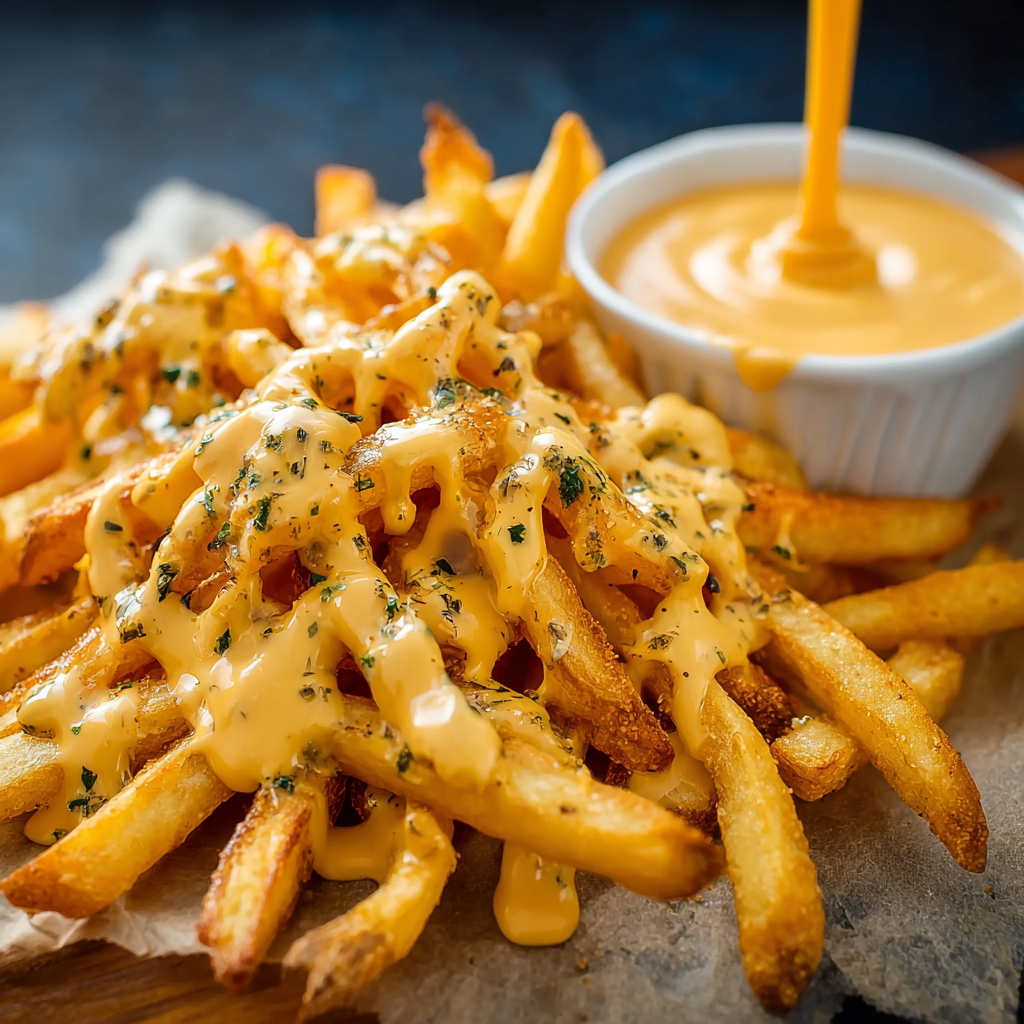
The Gastronomic Architecture of the “Liquid Gold”
In the hierarchy of the “Mother Sauces,” a professional Cheddar Cheese Sauce is a high-performance variation of a Mornay (a Béchamel enriched with cheese). For the specific application of coating hot fries, the sauce requires a lower viscosity than a Mac & Cheese base but a higher “cling” factor to prevent it from pooling at the bottom of the bowl. Data from culinary rheology suggests that achieving this balance requires a precise 1:1 fat-to-flour ratio for the roux, followed by a steady emulsification of high-fat dairy.
The goal is a permanent suspension. By utilizing a classic roux as the structural scaffold and incorporating the cheese off-the-heat, you ensure the cheddar melts into a velvet-like sauce without “breaking” into oil and grit.
The Essential Mise en Place: Ingredients and Technical Specs
To achieve a restaurant-grade finish, the type of cheddar and the preparation of the shred are the most critical factors.
The Foundation (The Roux & Dairy)
- High-Fat Whole Milk (500ml): Full-fat dairy provides the phospholipids necessary to keep the cheese fats in suspension.
- Unsalted European-Style Butter (30g): Higher fat content and lower water content result in a more stable roux.
- All-Purpose Flour (30g): The starch “mesh” that prevents the sauce from separating.
The Protein (The Star)
- Sharp Block Cheddar (225g): Technical Requirement: You must grate the cheese yourself from a block. Pre-shredded cheeses are coated in potato starch or cellulose; these anti-caking agents will turn your sauce “grainy” and dull.
- Aromatic Stabilizer: 1/2 tsp Dry Mustard Powder. This acts as a natural emulsifier to help bind the fats to the liquids.
The “Fries-Specific” Flavor Profile
- Smoked Paprika & Cayenne: A pinch of each to provide a “barbecue” back-note.
- Sea Salt & White Pepper: To maintain a flawless, monochromatic aesthetic.
The Masterclass: Step-by-Step Culinary Execution
Phase 1: The “Blond” Roux
In a heavy-bottomed saucepan over medium-low heat, melt the butter. Whisk in the flour and mustard powder. Cook for 2 minutes. Do not let it brown; you are looking for a “Blond Roux” that smells slightly nutty but remains pale. This step “cooks out” the raw flour taste.
Phase 2: The Tempering
Slowly drizzle in the milk, one splash at a time, whisking constantly. Adding the liquid slowly allows the starch granules to swell evenly, preventing lumps. Once all the milk is incorporated, simmer for 3–5 minutes until the sauce coats the back of a spoon (the Nappé stage).
Phase 3: The Thermal “Kill-Switch”
This is the most important step: Remove the pan from the heat entirely. Cheese proteins are highly heat-sensitive; if they boil, they will “seize” and become rubbery or gritty.
Phase 4: The Emulsion
Add the grated cheddar one handful at a time, whisking gently until fully melted before adding the next. The residual heat of the Béchamel is sufficient to melt the cheese. Finish with your spices and a squeeze of lemon juice or a drop of hot sauce to brighten the fats.
Common Technical Pitfalls to Avoid
- The “Grainy” Finish: Caused by over-heating the cheese or using pre-shredded varieties. If your sauce looks “sandy,” the proteins have tightened and pushed out the fat.
- The “Skin” Formation: If the sauce sits, a skin will form. To prevent this, press a piece of plastic wrap directly onto the surface of the sauce while it cools.
- Too Thick for Fries: If the sauce is too thick to pour, whisk in a tablespoon of warm milk at a time until it reaches a “honey-like” flow.
Conclusion: The Ultimate Dip
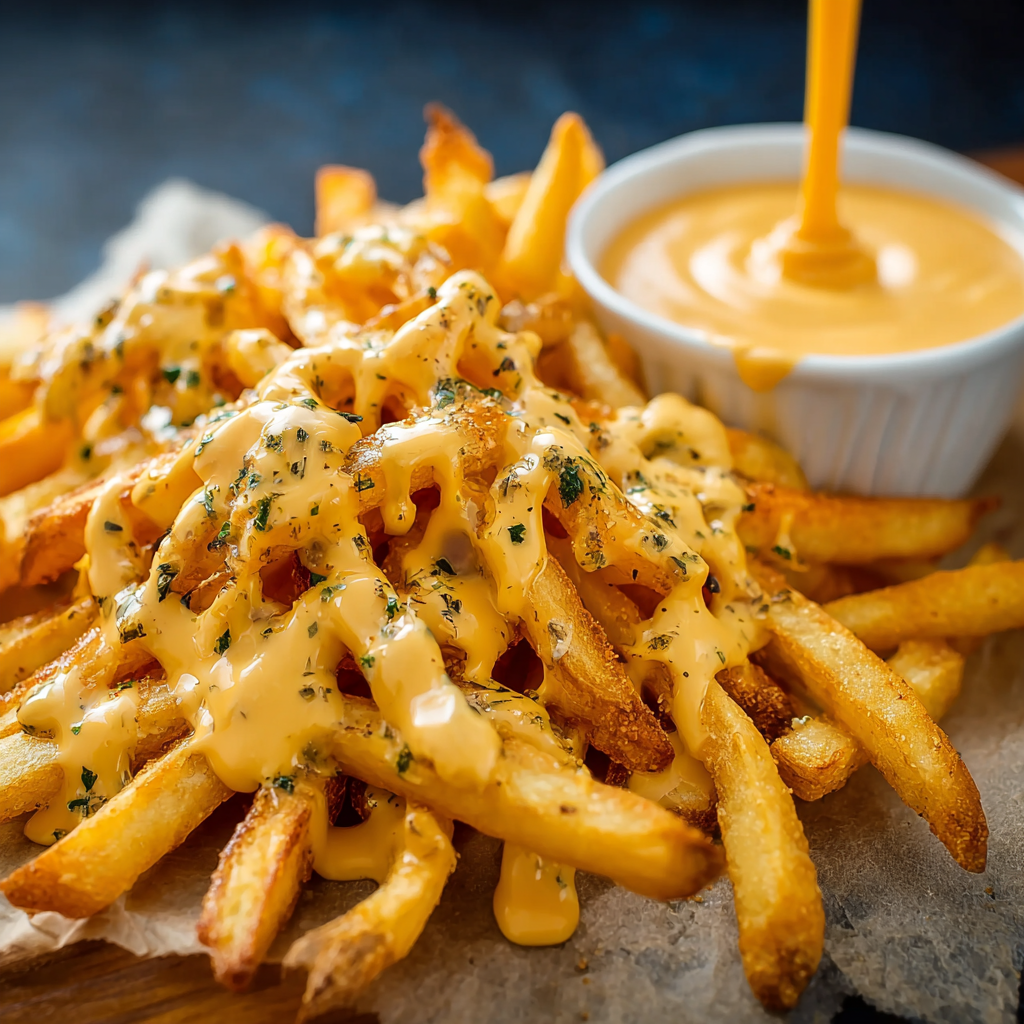
A professional Cheddar Sauce transforms standard fries into a gourmet experience. By respecting the temperature limits of the cheese and the hydration of the roux, you create a silken masterpiece that maintains its texture even as it cools. It is a vibrant, nutrient-dense addition to your repertoire that works as well on broccoli as it does on a mountain of crispy fries.
Frequently Asked Questions (Q&A)
Q: Can I use extra-sharp cheddar?
A: Yes, but be aware that older cheddar is more “brittle” and prone to breaking. A medium-to-sharp cheddar usually provides the best melt for fries.
Q: How do I fix a sauce that has separated?
A: If the sauce “breaks” (oil pooling on top), whisk in a tablespoon of warm milk or a squeeze of lemon juice. The acidity or fresh liquid can sometimes help re-stabilize the emulsion.
Q: Can I make this in advance?
A: Yes. It will thicken as it cools. To reheat, do so very slowly over a double boiler or on low power in the microwave, adding a splash of milk to restore the original viscosity.