Follow Me On Social Media!
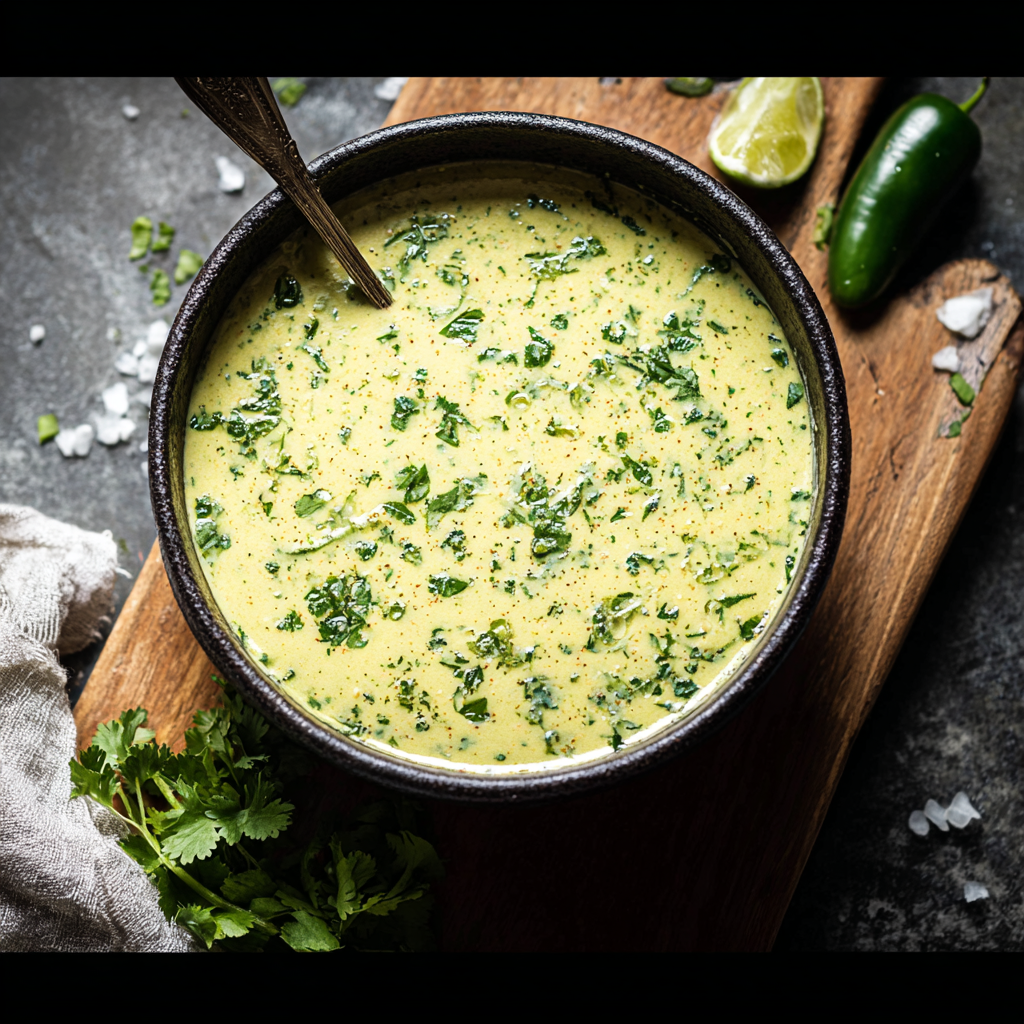
The Masterclass: Velvet Poblano Cream Sauce (Crema de Poblano)

The Gastronomic Architecture of the “Earth-and-Emulsion” Profile
In the hierarchy of Mexican “Salsas de Crema,” the Poblano Cream Sauce represents a sophisticated study in mild heat, smoky aromatics, and lipid stability. Unlike high-heat habanero or acidic tomatillo sauces, the Poblano pepper provides a deep, “forest-floor” earthiness with a very low Scoville rating. Data from culinary science suggests that the secret to a professional-grade sauce is the Complete Carbonization of the pepper’s waxy skin, which releases essential oils and develops complex “charred” sugars.
The technical challenge lies in the Emulsion Stability. When mixing the slightly acidic, roasted peppers with heavy dairy, there is a risk of curdling or “breaking.” By utilizing a “Tempering” technique and a high-fat dairy base, you ensure a silken, permanent suspension that coats proteins with professional clarity.
The Essential Mise en Place: Technical Specs
To achieve a restaurant-grade “emerald” hue and velvet texture, the roasting method and the dairy choice are the most critical factors.
The Aromatic Base (The “Char”)
- Fresh Poblano Peppers (3–4 large): Choose dark green, heavy peppers with smooth skin for the best roasting results.
- White Onion & Garlic (3 cloves): Sautéed until translucent to provide a savory “back-note” without raw bite.
- Fresh Cilantro (1/2 cup): To reinforce the green color and provide a floral “top-note.”
The Emulsion (The Cream)
- Heavy Cream or Mexican Crema (240ml / 1 cup): High fat content (30%+) is essential for a stable, heat-resistant sauce.
- Chicken or Vegetable Broth (60ml / 1/4 cup): To adjust viscosity and add depth.
- Unsalted Butter (15g): For a final, glossy finish (the “Montee au Beurre” effect).
The Masterclass: Step-by-Step Culinary Execution
Phase 1: The Maillard Roasting
Place the whole Poblanos directly over a gas flame or under a broiler. Rotate until the skin is 100% blistered and black. Place the hot peppers in a bowl and cover with plastic wrap for 10 minutes. This “sweating” phase uses residual steam to detach the skin from the flesh.
Phase 2: The “Clean” Prep
Remove the charred skin under running water or with a paper towel. De-seed and de-vein the peppers. Pro Tip: Do not over-rinse; the small black specks left behind provide the “authentic” smoky character.
Phase 3: The High-Speed Emulsion
In a blender, combine the roasted peppers, sautéed onions, garlic, cilantro, and half of the cream. Blend on high until perfectly smooth. A high-speed blender is required to fully break down the pepper fibers for a “velvet” mouthfeel.
Phase 4: The Low-Heat Reduction
Pour the mixture into a saucepan over medium-low heat. Add the remaining cream and broth. Simmer for 5–8 minutes. Crucial: Do not allow the sauce to reach a rolling boil; high heat can cause the cream to “break” and release oil. Finish by whisking in the cold butter.
Common Technical Pitfalls to Avoid
- The “Grey” Sauce: This happens if you over-cook the sauce or use oxidized peppers. Adding fresh cilantro during the blending phase acts as a natural color corrector.
- Grainy Texture: If the sauce isn’t smooth, the pepper fibers didn’t break down. Strain the final sauce through a fine-mesh sieve (Chinois) for a truly professional finish.
- Lack of Depth: If the sauce tastes “flat,” add a squeeze of lime juice or a teaspoon of salt. Acidity and sodium act as “volume knobs” for the smoky poblano flavor.
Conclusion: A Versatile Culinary Canvas
Poblano Cream Sauce is a testament to the fact that mild peppers can deliver immense complexity. By mastering the roasting and “sweating” techniques, you produce a sauce that is as elegant on a piece of grilled salmon as it is on a traditional chicken enchilada. It is a nutrient-dense, visually stunning addition to your repertoire that bridges the gap between rustic Mexican home cooking and modern fine dining.
Frequently Asked Questions (Q&A)
| Question | Expert Answer |
| Can I make it spicy? | Yes. Blend in a roasted Serrano pepper along with the Poblanos for a significant heat boost. |
| Is there a vegan version? | Substitute the heavy cream with full-fat coconut milk or a cashew cream (soaked cashews blended with water). |
| How long does it keep? | Store in an airtight container for up to 4 days. Reheat gently over low heat, adding a splash of milk to restore texture. |