Follow Me On Social Media!
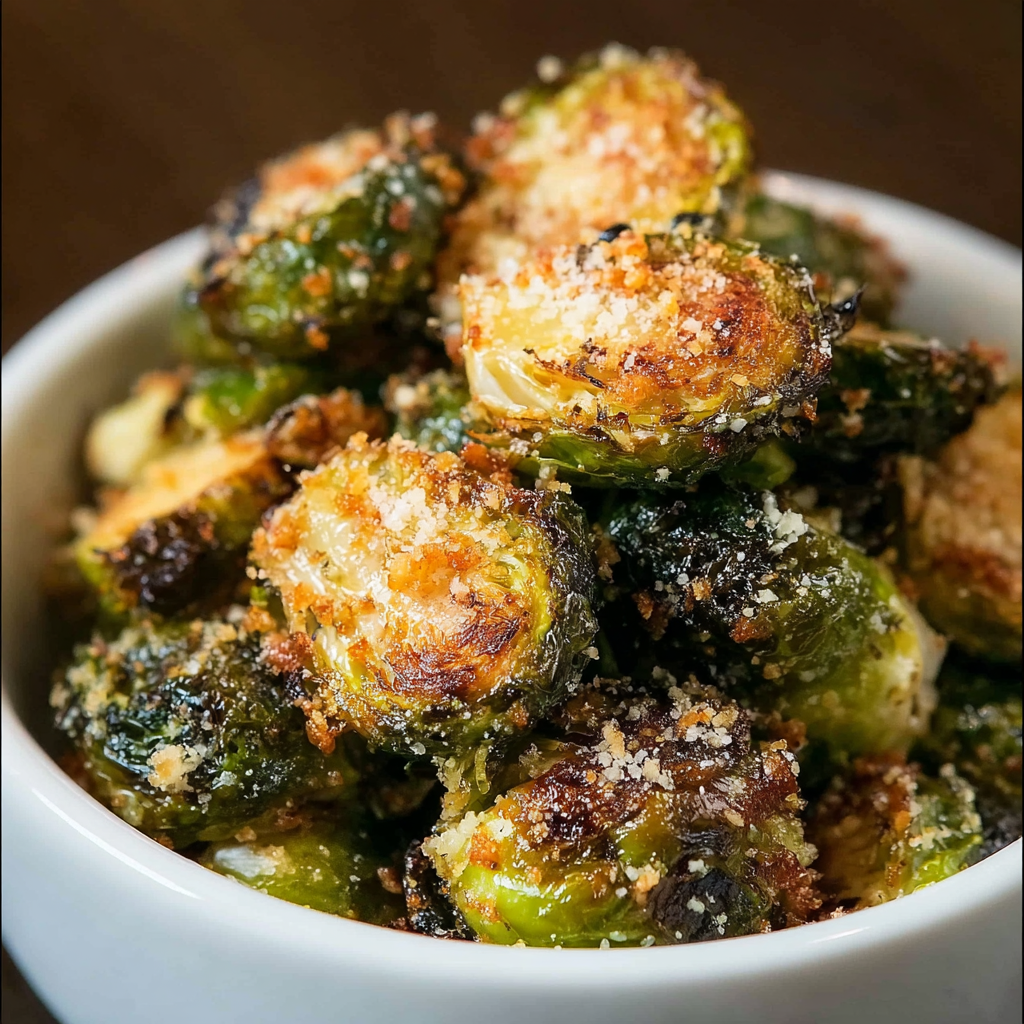
The Science of the Crunch: CRISPY Parmesan Roasted Brussels Sprouts

The Gastronomic Architecture of the “Shatter-Crisp” Surface
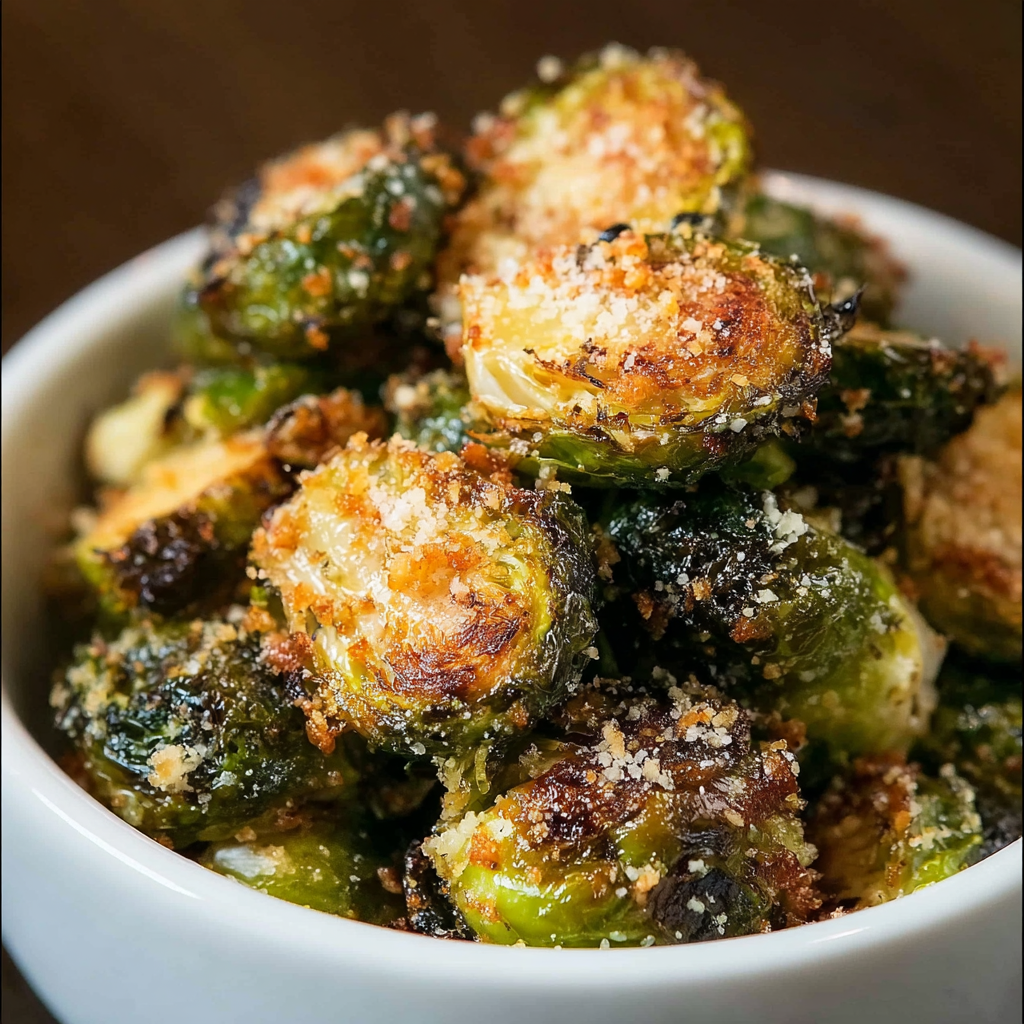
In the world of vegetable cookery, achieving a truly Crispy Parmesan Brussels Sprout represents a sophisticated study in moisture evaporation and the Maillard reaction. The technical challenge of the Brussels sprout lies in its dense, layered anatomy; the high water content in the core often leads to steaming, which results in a mushy texture.
To achieve a “shatter-crisp” exterior, you must employ Surface Area Maximization. By halving the sprouts and roasting them cut-side down, you create a thermal seal that fries the flat surface in its own natural sugars and added fats, while the outer leaves dehydrate into delicate, savory chips.
The Essential Mise en Place: Technical Specs
To achieve a restaurant-grade “snap,” the dry state of the vegetable and the quality of the cheese are the most critical technical decisions.
The Foundation (The Sprout)
- Fresh Brussels Sprouts (450g / 1 lb): Technical Requirement: They must be bone-dry. After washing, use a salad spinner or pat them individually with paper towels. Any residual water will turn into steam in the oven, destroying the crispness.
- Avocado Oil or Grapeseed Oil (2 tbsp): These oils have a high smoke point (250∘C / 500∘F), allowing for the intense heat required for crisping without the oil breaking down and becoming bitter.
The “Crisp” Enhancers
- Parmigiano Reggiano (60g / ½ cup): Finely grated. Use the “sandy” texture of a microplane. The high protein-to-fat ratio of aged Parmesan allows it to form a lacy, crisp crust (a frico) rather than a gooey melt.
- Garlic Powder & Smoked Paprika: To provide a savory backbone that survives the high-heat roasting.
- Panko Breadcrumbs (Optional, 2 tbsp): For an added structural “crunch” layer.
The Masterclass: Step-by-Step Culinary Execution
Phase 1: The Thermal Pre-Heat
Place your empty baking sheet in the oven while it preheats to 220°C (425°F). This ensures that the moment the sprouts touch the metal, the searing process begins. This “thermal shock” prevents the sprouts from absorbing too much oil.
Phase 2: The Emulsion Coating
In a large bowl, toss the dry, halved sprouts with the oil and spices. Do not add the cheese yet. Roasting the cheese for the full duration can lead to burning.
Phase 3: The “Cut-Side Down” Alignment
Arrange the sprouts on the hot baking sheet, ensuring every single one is flat-side down. This is the professional secret to a uniform, deep-brown crust. Roast for 15–20 minutes.
Phase 4: The Parmesan Fusion
Remove the tray and sprinkle the finely grated Parmesan (and panko, if using) over the sprouts. Return to the oven for a final 5–8 minutes. The cheese will melt into the crevices and then solidify into a golden, umami-rich crust.
Common Technical Pitfalls to Avoid
- The “Soggy” Sprout: Caused by overcrowding the pan. If the sprouts are touching, the moisture they release has nowhere to go but back into the vegetable. Leave at least 1cm of space between each half.
- Burnt Leaves: A few charred outer leaves are desirable for flavor, but if the whole tray is turning black, your oven rack is likely too high. Move to the center rack.
- Bitter Aftertaste: This happens if you use low-quality olive oil at such high heat. Stick to high-smoke-point oils for roasting.
Conclusion: A Masterpiece of Texture and Umami
Crispy Parmesan Brussels Sprouts are a testament to the fact that technique is as important as ingredients. By mastering the “dry-prep” and the “cut-side sear,” you transform a polarizing vegetable into a high-texture, savory masterpiece. It is the ultimate side dish that bridges the gap between healthy greens and indulgent comfort food.
Frequently Asked Questions (Q&A)
| Question | Expert Answer |
| Can I use frozen sprouts? | Not recommended for this specific level of “crisp.” Frozen sprouts have compromised cell walls that release too much water during roasting. |
| How do I make them “extra” crispy? | Add 1 tsp of cornstarch to the oil-and-spice toss. The starch absorbs excess moisture and creates a glass-like crunch. |
| What sauce pairs best? | A balsamic glaze reduction or a spicy Sriracha-honey drizzle provides the perfect acidic “cut” to the rich Parmesan. |