Follow Me On Social Media!
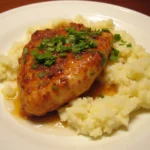
The Culinary Architect: Creamy Garlic Chicken Breasts

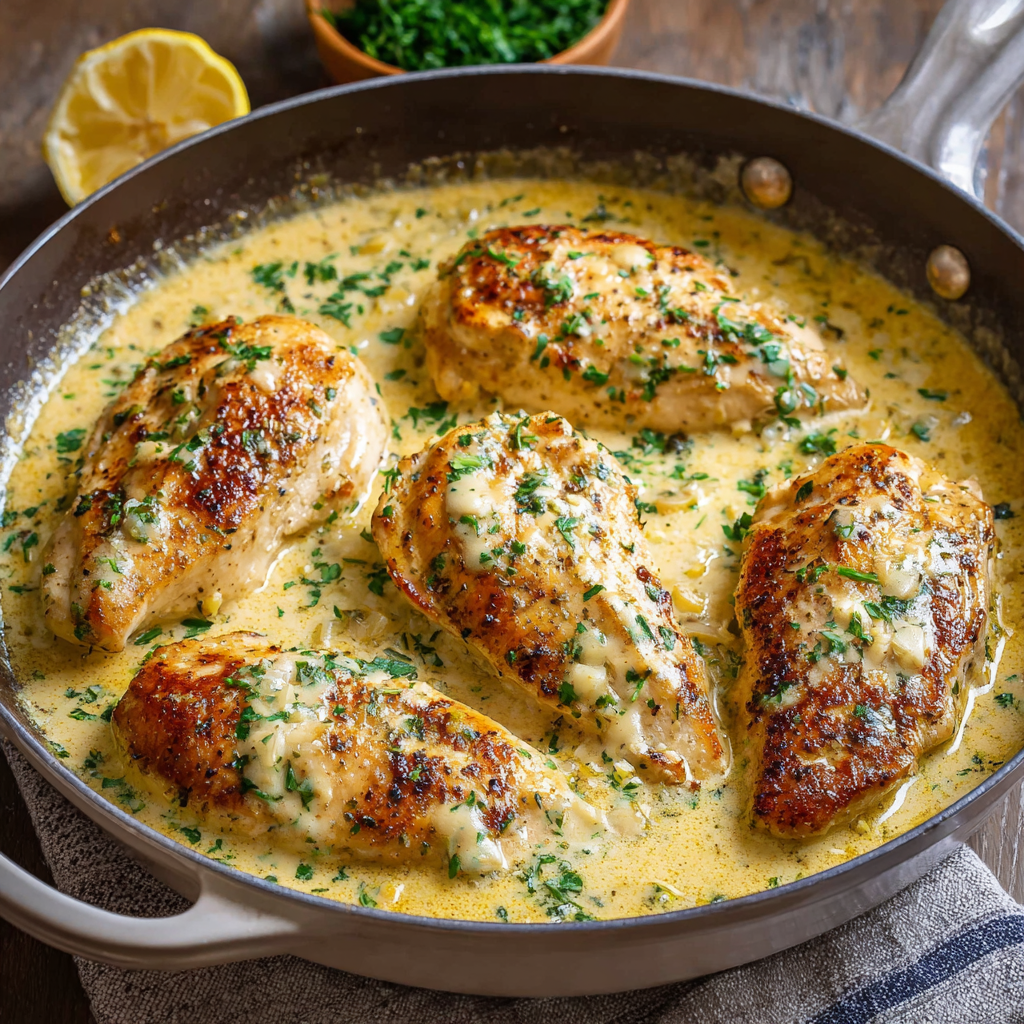
The Gastronomic Architecture: The “Velouté-Allicin” Emulsion
In the hierarchy of high-protein pan-sauces, Creamy Garlic Chicken represents a sophisticated study in Allicin Mellowing and Lipid Stabilization. The technical challenge is the “Garlic Paradox”: raw garlic is pungent and sharp, but when simmered in a high-fat matrix (heavy cream), it undergoes a “Sweet-Savory” transformation. By utilizing a Heavy-Bottomed Skillet and a Two-Stage Heat Process, you create a Maillard-crusted exterior on the chicken while the sauce acts as a Thermal Buffer, finishing the interior to succulent perfection.
The “irresistibility” factor is driven by the Glutamate-Lactic Loop: the savory umami of the chicken drippings (fond) is deglazed into the lactic fats of the cream, resulting in a sauce that physically “clings” to the protein fibers.
Essential Mise en Place: Technical Specs
To achieve a restaurant-grade “shatter-crisp” skin and a silk-smooth sauce, the uniform thickness of the protein and the “Anti-Clumping” of the cheese are the most critical factors.
The Foundation (The Protein)
- Chicken Breasts (600g – 800g): Technical Requirement: Slice in half horizontally to create thin cutlets, or pound to a uniform 1.5cm thickness. This ensures synchronized cooking and prevents “Edge-Desiccation.”
- The “Grip” Coating: A light dredge in seasoned flour (salt, pepper, onion powder). This facilitates the Maillard reaction and provides a starch-bridge to thicken the sauce later.
The “Aromatic-Cream” Matrix
- Heavy Cream (250ml): The high-lipid base necessary to prevent curdling when combined with aromatics.
- Fresh Garlic (8–10 cloves): Expert Tip: Use a combination of minced garlic (for immediate flavor) and sliced garlic (for sweet, buttery bites).
- Chicken Stock (120ml) & Dry White Wine (60ml): The acidic deglazing agents.
- Parmesan Cheese (50g): Freshly grated to provide “Saline-Depth.”
The Masterclass: Step-by-Step Culinary Execution
Phase 1: The “Maillard” Foundation
Heat oil and a knob of butter in a large skillet. Sear the floured chicken for 3–4 minutes per side until a deep golden crust forms. Remove the chicken. Technical Requirement: Do not wash the pan. The “fond” (brown bits) stuck to the bottom is concentrated umami essential for the sauce.
Phase 2: The “Low-Temp” Garlic Bloom
Reduce heat to medium. Add the garlic and sauté for 60 seconds until fragrant but not brown. Expert Tip: If garlic turns dark brown, it becomes bitter; if it stays white, it stays sharp. Aim for a “Pale Straw” hue.
Phase 3: The “Aqueous-Acid” Deglaze
Pour in the white wine and chicken stock. Use a wooden spoon to scrape the fond from the bottom of the pan. Technical Requirement: Reduce the liquid by half. This concentrates the flavors and removes the harsh “alcohol-bite” of the wine.
Phase 4: The “Lipid-Stabilization” Finish
Whisk in the heavy cream and simmer for 2 minutes. Stir in the Parmesan until melted. Return the chicken to the pan and spoon the sauce over the cutlets. Expert Tip: The residual heat will finish the chicken while the sauce thickens into a glossy glaze.
Common Technical Pitfalls to Avoid
- The “Broken” Sauce: Occurs if you use low-fat milk instead of heavy cream. High heat and acidity from the wine will cause low-fat dairy to “grain.”
- Tough Chicken: Caused by over-searing. The chicken should only be about 80% cooked after the sear; the final 20% happens in the simmering sauce to ensure maximum juiciness.
- The “Garlic Burn”: Always add garlic after the chicken is removed and the pan has cooled slightly. Garlic has a very high surface-area-to-volume ratio and burns in seconds.
Frequently Asked Questions (Q&A)
| Question | Expert Answer |
|---|---|
| Can I make it dairy-free? | Yes. Use Full-Fat Coconut Milk or a cashew-based cream. Add a teaspoon of lemon juice to mimic the lactic tang. |
| What is the best wine? | A dry, high-acid white like Sauvignon Blanc or Pinot Grigio cuts through the cream best. |
| Can I add greens? | Baby Spinach is the classic addition. Fold it in at the very end; the residual heat will wilt it in seconds. |