Follow Me On Social Media!
The Lipid-Protein Matrix: Avocado Egg Salad

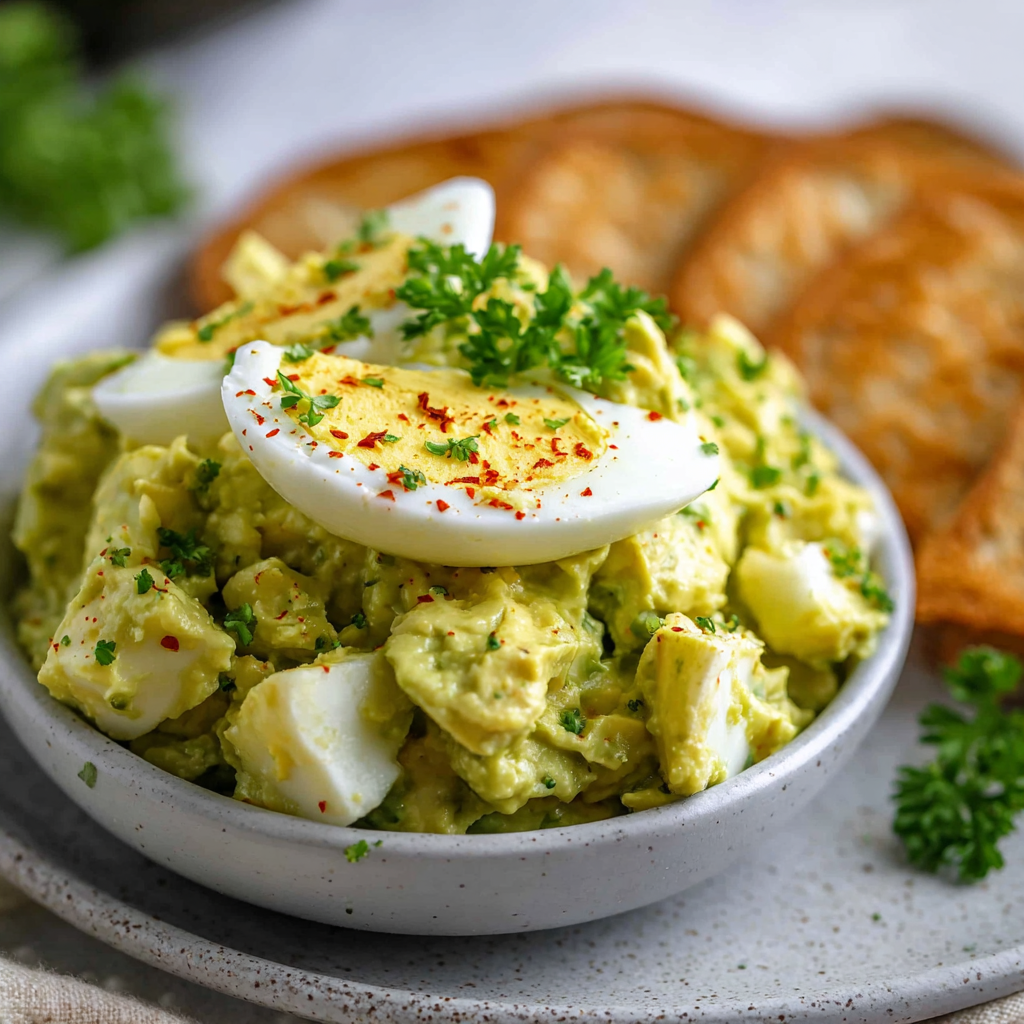
The Gastronomic Architecture: The “Green” Emulsion
In the hierarchy of high-protein deli classics, Avocado Egg Salad represents a sophisticated study in Lipid Substitution and Oxidation Control. The technical challenge lies in replacing the traditional mayonnaise (an oil-in-water emulsion) with the cellular fats of a ripe avocado. While mayonnaise is shelf-stable, avocado contains polyphenol oxidase, an enzyme that turns the salad brown when exposed to oxygen.
The objective is to achieve a creamy, “clinging” texture where the avocado acts as a biological binder for the sulfurous proteins of the hard-boiled egg, brightened by a precise acid-base balance.
Essential Mise en Place: Technical Specs
To achieve a restaurant-grade “velvet” finish, the ripeness of the fruit and the temperature of the eggs are the most critical factors.
The Foundation (The Protein)
- Large Eggs (6): Technical Requirement: Hard-boiled for exactly 9 to 10 minutes. Over-boiling leads to the “green ring” (ferrous sulfide), which clashes with the fresh green of the avocado.
- Ripe Hass Avocado (1 large): Look for a “gentle give” at the neck. The high oleic acid content provides the necessary creaminess to bypass mayonnaise entirely.
The Aromatic & Acid Matrix
- Fresh Lime or Lemon Juice (1 tbsp): The citric acid serves two functions: it provides a sharp top note and acts as an antioxidant to prevent browning.
- Red Onion & Celery: Finely minced to provide a mechanical “snap” against the soft fats.
- Fresh Chives or Dill: To provide floral, herbal “lift.”
The Masterclass: Step-by-Step Culinary Execution
Phase 1: The Thermal Shock (The Eggs)
Boil your eggs, then immediately submerge them in an ice bath for 10 minutes. This “Thermal Shock” shrinks the egg membrane away from the shell, ensuring a clean peel and stopping the cooking process to keep the yolks creamy.
Phase 2: The “Partial Mash” Emulsion
In a medium bowl, mash the avocado with the lime juice, salt, and pepper until 70% smooth. Leaving 30% in small chunks provides a superior mouthfeel. The lime juice must be integrated early to coat the avocado cells before they oxidize.
Phase 3: The “Geometric” Fold
Dice the chilled eggs into 1cm cubes. Add them to the avocado base along with the onions and herbs. Use a “Low-Shear” folding motion with a spatula. You want to coat the eggs in the green “mayonnaise” without pulverizing the whites.
Phase 4: The Stabilization Rest
Let the salad sit in the refrigerator for 15 minutes. This allows the salt to draw a microscopic amount of moisture from the onions, thinning the avocado fats just enough to create a glossy, unified sauce.
Common Technical Pitfalls to Avoid
- The “Grey” Salad: Caused by lack of acid or leaving the salad uncovered. If storing, press plastic wrap directly onto the surface of the salad to eliminate the oxygen gap.
- The “Mushy” Mess: Occurs if the eggs are still warm when mixed. Warmth accelerates the breakdown of the avocado’s structure, resulting in a soup-like consistency.
- Under-Seasoning: Avocado and egg are both “fat-heavy” and neutral. They require a significant amount of salt and black pepper to “wake up” the flavor profile.
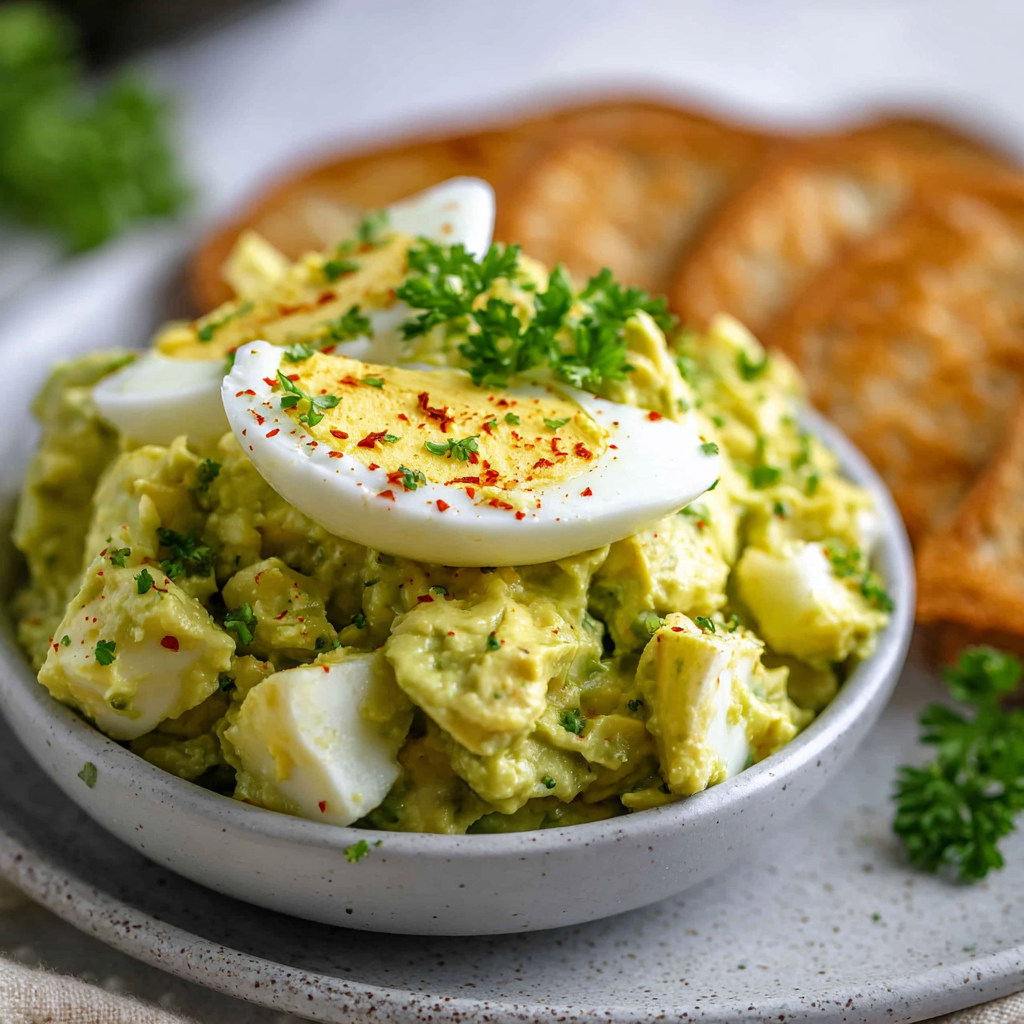
Frequently Asked Questions (Q&A)
| Question | Expert Answer |
| How long does it keep? | Best consumed within 4 to 6 hours. Even with lime juice, enzymatic browning will eventually occur. |
| Can I add Greek yogurt? | Yes. Adding 1-2 tbsp of Greek yogurt increases the protein count and adds a tangy “lactic” depth. |
| What is the best bread pairing? | A high-fiber, toasted sourdough or rye provides the necessary structural “crunch” to support the heavy salad. |